Facebook

Twitter (X)

Instagram

Somali Magazine - People's Magazine
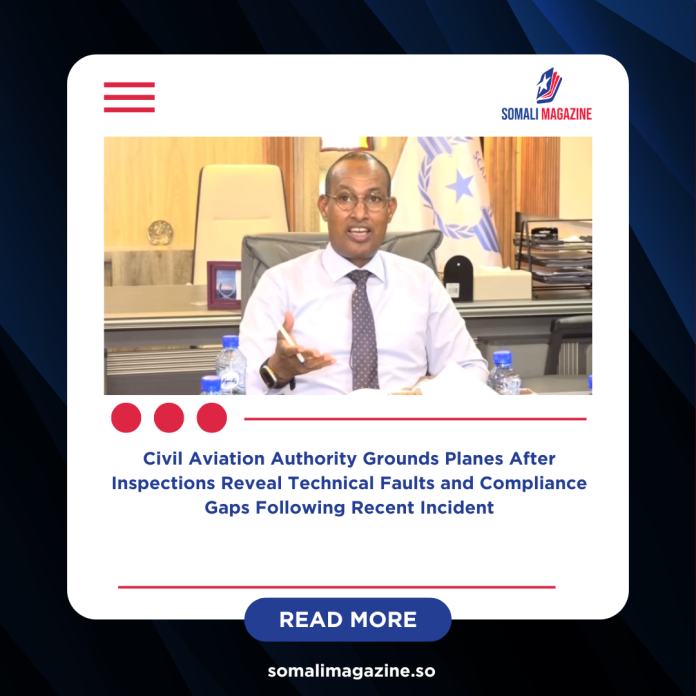
Somalia’s Civil Aviation Authority (SCAA) has suspended several aircraft operating in the country after inspections found technical problems and failures to meet international aviation safety standards. The authority said the move is part of a broader effort to improve flight safety, strengthen oversight, and rebuild public trust in the aviation sector.
The decision follows a February 10 incident involving a plane operated by Starsky Aviation. Shortly after taking off from Aden Adde International Airport in Mogadishu, the aircraft developed a technical problem. When it returned to land, it reportedly overshot the runway and came to a stop near the shoreline of the Indian Ocean. All 55 passengers and crew members on board survived without loss of life, but the incident raised serious concerns about aircraft maintenance and regulatory compliance.
In a statement, the SCAA said the suspensions were based on inspection findings that showed certain aircraft were not meeting standards set by the International Civil Aviation Organization (ICAO). While the authority did not disclose the exact number of aircraft affected or name the airlines involved, it made clear that any plane failing to comply with international requirements would not be allowed to operate until issues are resolved.
The regulator emphasized that passenger safety remains its top priority. Officials said the recent accident served as a wake-up call and highlighted the need for stricter enforcement of aviation rules. The SCAA now plans to intensify monitoring and inspections to ensure that all airlines operating in Somalia meet global safety benchmarks.
Beyond technical compliance, the authority is also expanding its scrutiny to include cabin conditions and service standards. This includes reviewing seat configurations, seat spacing, and overall service quality. According to the SCAA, these measures are aimed at protecting passenger rights and ensuring airlines follow accepted international norms, not only in safety but also in customer experience.
The announcement comes at a time when travelers on the busy Mogadishu–Nairobi route have been voicing frustration. Many passengers complain about high ticket prices and cramped seating. A return ticket between the two capitals typically costs between $400 and $450, even though the flight takes about 90 minutes. Some travelers say certain airlines use smaller aircraft with tightly packed seating to maximize the number of passengers, leaving limited legroom and shoulder space.
For many people, the cost and comfort of flights have become growing concerns, especially as air travel remains one of the main links between Somalia and neighboring countries. Business travelers, families, and members of the Somali diaspora rely heavily on this route, making service standards and affordability important public issues.
In recent years, Somalia’s aviation sector has grown steadily as the country continues its path toward greater stability and regional integration. Increased business activity and stronger diplomatic ties have led to higher demand for flights, both domestically and internationally. However, rapid growth has also brought challenges, particularly in maintaining consistent safety oversight and ensuring fair competition among airlines.
The SCAA’s latest action signals a tougher regulatory stance. By grounding aircraft that do not meet required standards, the authority hopes to send a clear message that safety and compliance are non-negotiable. Officials believe that stronger enforcement will ultimately boost passenger confidence and improve the reputation of Somalia’s aviation industry.
While the suspensions may cause short-term disruptions, regulators argue that stricter oversight is necessary for long-term stability. Ensuring that aircraft are properly maintained and that airlines follow international rules is seen as essential to protecting lives and strengthening the country’s air transport system.