
Facebook

Twitter (X)

Instagram

Somali Magazine - People's Magazine
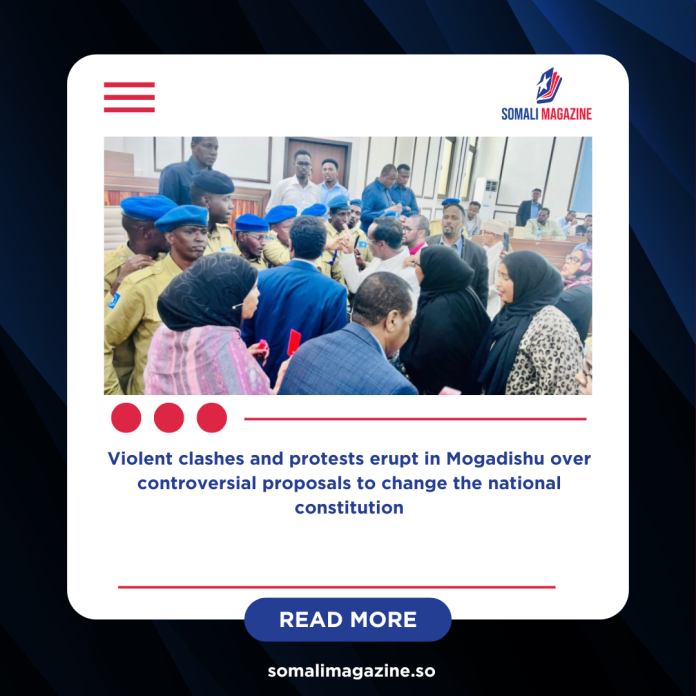
Chaos erupted in Somalia’s lower house of parliament this Monday as a heated dispute over the country’s future turned into a physical standoff. The session was intended to kick off a crucial debate on amending chapters five through nine of the provisional constitution, but the proceedings were cut short before they could even begin. Opposition lawmakers, fueled by concerns over the nature of these changes, took drastic measures to ensure the debate didn’t happen, including forcibly occupying the speaker’s seat and blocking all entrances to the chamber.
The atmosphere was tense from the start. Speaker Sheikh Adan Mohamed Nur Madobe found himself locked out of the hall as opposition MPs formed a human wall, defying the scheduled session. What began as a political protest quickly devolved into shouting matches and physical altercations. In the heat of the moment, equipment was vandalized, and microphones were ripped out to ensure no speeches could be delivered. The destruction of the public address system effectively silenced the government’s attempt to introduce the new proposals, bringing the entire legislative process to a grinding halt.
The unrest wasn’t confined to just one day. By Wednesday, the situation escalated further as rival politicians reportedly traded punches inside the building. The violence even involved high-ranking officials, including the internal security minister, highlighting how deeply these constitutional disagreements have fractured the government. Several people were injured during the scuffles, with one lawmaker requiring hospital treatment for a leg injury allegedly caused by a security officer.
Beyond the physical brawls, the chaos touched on issues of transparency. Independent journalists were barred from the compound, a move that sparked immediate backlash from some members of parliament. Those lawmakers argued that the public has a right to know what is happening behind closed doors, especially when the stakes for the country’s legal framework are so high.
At the heart of this explosive conflict is a fundamental disagreement over how Somalia should be governed. The federal government, led by President Hassan Sheikh Mohamud, is pushing for these amendments to modernize the state-building process. However, the opposition is waving a red flag. They claim the proposed changes are a thinly veiled attempt to extend the president’s term and centralize power in the executive branch. They argue that such a significant rewrite of the nation’s foundation is being rushed through without enough public input or a genuine political consensus.
This breakdown in communication reflects a deepening divide in Mogadishu. As lawmakers tear up agenda papers and block doors, the path forward for Somalia’s fragile political transition remains uncertain. The events of this week have laid bare the intense mistrust between rival factions, proving that until a middle ground is found, the road to a permanent constitution will likely remain rocky and unpredictable.