
Facebook

Twitter (X)

Instagram

Somali Magazine - People's Magazine
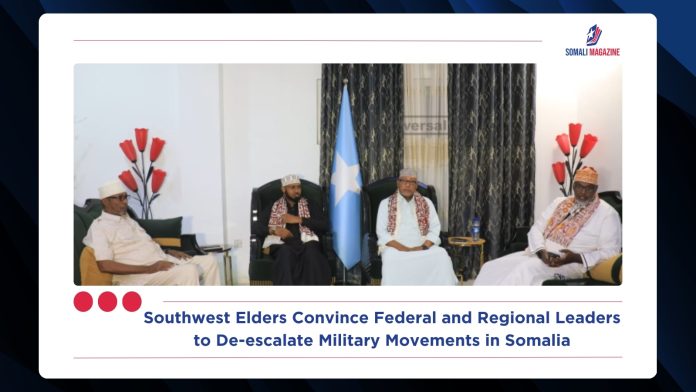
Southwest elders convince federal and regional leaders to de-escalate military movements, marking a significant step toward easing rising tensions that had threatened to escalate into open confrontation. The intervention by respected community figures highlights the enduring role of traditional leadership in navigating Somalia’s complex political landscape.
The agreement to scale back troop deployments follows days of heightened Somalia political tensions, particularly in areas linked to Southwest State Somalia. Reports had indicated increased military positioning by both federal and regional forces, raising concerns among residents and observers about the risk of armed clashes.
Elders, who often act as mediators in Somali society, engaged in intensive consultations with leaders from both sides. Their efforts focused on promoting dialogue and preventing further escalation. According to individuals familiar with the discussions, the elders emphasized the potential humanitarian and political consequences of conflict, urging restraint and cooperation.
The success of these peace efforts Somalia reflects a long-standing tradition where community leaders play a central role in conflict resolution. In a country where formal institutions are still evolving, such mechanisms often provide an essential bridge between competing authorities. Analysts note that this approach has been particularly effective in moments of crisis, helping to de-escalate situations that might otherwise spiral out of control.
The federal regional dispute Somalia has been driven by disagreements over governance, electoral processes, and administrative authority. While tensions remain unresolved, the decision to reduce military presence offers a window of opportunity for further negotiations. Both sides have signaled a willingness to continue dialogue, though challenges persist.
Observers caution that conflict de-escalation Somalia is only a first step. Sustained engagement and compromise will be necessary to address the underlying issues that led to the standoff. Without a clear framework for resolving disputes, similar tensions could re-emerge in the future.
For communities in affected areas, the reduction in military activity brings a measure of relief. Residents had expressed fears about potential violence disrupting daily life, particularly in regions already facing economic and humanitarian pressures. The intervention by elders has therefore been widely welcomed as a positive development.
The role of Southwest elders convince federal and regional leaders to de-escalate military movements also underscores the importance of inclusive approaches to governance. By involving traditional leaders, political actors can draw on established networks of trust and legitimacy that are crucial for maintaining stability.
As the situation evolves, attention will turn to how both federal and regional authorities build on this momentum. The current pause in tensions provides an opportunity to pursue meaningful dialogue and develop solutions that address the concerns of all parties involved.
In Somalia’s fragile political environment, moments of de-escalation are significant. They not only prevent immediate conflict but also create space for longer-term efforts aimed at strengthening unity and governance across the country.