
Facebook

Twitter (X)

Instagram

Somali Magazine - People's Magazine
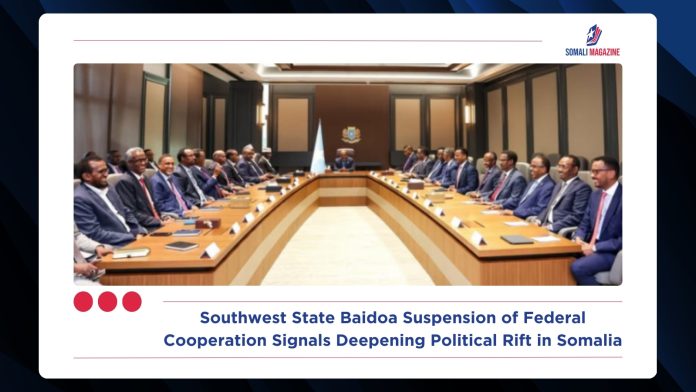
The Southwest State Baidoa suspension of federal cooperation has intensified political tensions in Somalia, marking a significant escalation in the fragile relationship between regional administrations and the federal government. Announced in Baidoa, the administrative capital of Southwest State, the decision reflects growing dissatisfaction among regional leaders over what they describe as federal overreach and a lack of meaningful consultation on key national matters.
Officials from Southwest State stated that the move was necessary to protect the region’s constitutional rights and autonomy. According to regional authorities, repeated attempts to resolve disputes through dialogue had failed, leaving suspension as the only viable option. The decision has drawn attention across the country, as it highlights ongoing friction within Somalia’s federal system, where power-sharing arrangements remain a contentious issue.
The Somalia federal government dispute is not new, but this latest development underscores how unresolved disagreements can disrupt governance and cooperation. Analysts note that tensions have been building over issues such as resource allocation, electoral processes, and security coordination. In particular, disagreements surrounding electoral frameworks and the role of federal institutions have fueled mistrust between Mogadishu and several federal member states.
In Baidoa, political observers describe the atmosphere as cautious but resolute. Southwest State leadership has emphasized that the suspension is not a declaration of separation, but rather a political statement aimed at prompting constructive dialogue. Leaders insist that they remain committed to Somalia’s unity, while calling for a more balanced and inclusive federal system.
The move has also raised concerns among international partners and policy experts, who warn that prolonged standoffs could hinder progress on security and development. Somalia governance crisis narratives often point to the delicate balance required to maintain cooperation between federal and regional authorities, especially in a country still recovering from decades of instability.
For residents in Southwest State, the impact of political tensions is closely watched. While daily life continues, there is growing awareness that political disagreements at the top can have downstream effects on service delivery and economic stability. Civil society voices have urged both sides to prioritize dialogue and avoid actions that could deepen divisions.
As the situation unfolds, attention remains on whether negotiations will resume and how both sides will navigate the current impasse. The Southwest State Baidoa suspension of federal cooperation serves as a reminder of the ongoing challenges facing Somalia’s federal model, where unity depends on trust, compromise, and consistent engagement between all levels of government.