
Facebook

Twitter (X)

Instagram

Somali Magazine - People's Magazine
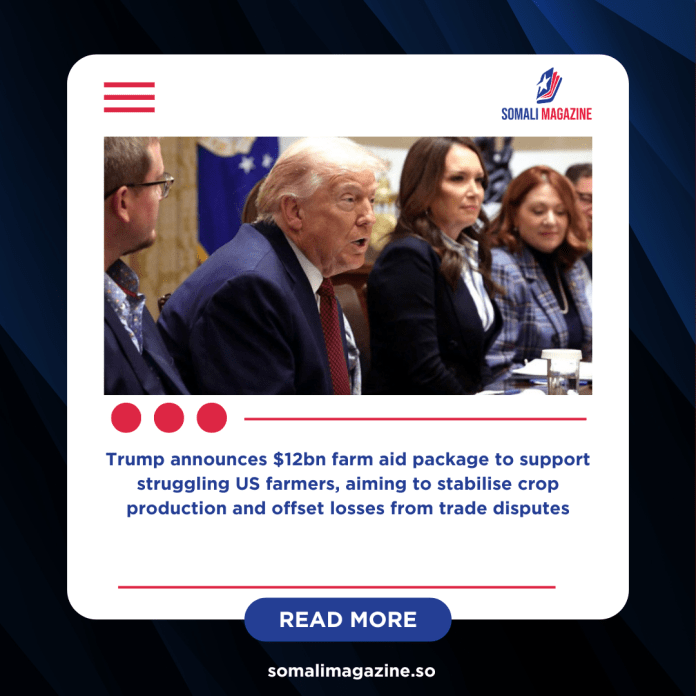
US President Donald Trump has announced a new $12 billion aid package to help American farmers who are struggling with low crop prices and the impact of ongoing trade disputes. Most of the funding, about $11 billion, will go directly to farmers growing major crops such as corn, soybeans, cotton and wheat through the Farmer Bridge Assistance programme. Another $1 billion is being held for farmers who grow specialty crops that are not included in the main programme.
Speaking at the White House alongside top officials, Trump said the support is meant to “bridge” farmers through a difficult period caused by years of trade tensions and inflation. He added that boosting domestic food production is part of his plan to make groceries more affordable for American families—a topic that has become a major concern for many voters.
Farmers have generally been strong supporters of Trump, but his trade battles—especially with China—have disrupted their businesses. China is the world’s largest buyer of soybeans, and for many years it bought huge amounts from the United States. But after Trump placed new tariffs on Chinese goods earlier this year, China stopped purchasing American soybeans for several months, leaving many farmers without their biggest customer.
Trump also warned that he could place a new 5% tariff on Mexico. He accused Mexico of failing to meet an 80-year-old water-sharing agreement that gives American farmers access to water from Rio Grande tributaries. He said the dispute is hurting US farmers who depend on that water supply.
The White House argues the aid package will help farmers manage this year’s harvest, plan for next season, and stay afloat until the government’s trade strategies create better market conditions. Agriculture Secretary Brooke Rollins said the final $1 billion in the package will be used to understand the needs of specialty crop farmers and ensure the government targets assistance correctly.
Many farmers say they appreciate the help but would prefer stable markets rather than government payments. They say they simply want a “level playing field” where they can sell their crops without trade barriers.
Mark Legan, a corn, soybean and livestock farmer from Indiana, told the BBC that the payment will help cover basic expenses. With crop prices falling and profits shrinking, he said he has delayed buying new equipment, but the aid could help him make necessary investments. Still, he believes the package will not fix underlying problems like high production costs or the loss of reliable export markets.
Another farmer, Brad Smith from Illinois, said he learned about the plan while attending a farm convention in Chicago. He explained that most farmers don’t like relying on government aid, but many don’t have much choice right now. If he receives money, he expects it will go immediately toward unpaid bills and purchasing seeds, fertiliser, and chemicals for next year.
Some farmers worry that past aid packages have not been distributed fairly, saying bigger farms have sometimes benefited more than smaller or mid-sized ones.
During a recent meeting between Trump and Chinese President Xi Jinping, China pledged to buy at least 12 million metric tonnes of American soybeans by the end of 2025 and much more in the following years. So far, China has purchased only a fraction of that amount, though buying has increased in recent weeks. Treasury Secretary Scott Bessent said he believes China will meet the target by the end of February. He argued that the new aid package is needed because China used American farmers as leverage in trade negotiations, and the government must now help farmers recover and prepare for the future.
Trump also signed an executive order creating special task forces to strengthen food supply chains and investigate anti-competitive behavior in the agriculture industry.