
Facebook

Twitter (X)

Instagram

Somali Magazine - People's Magazine
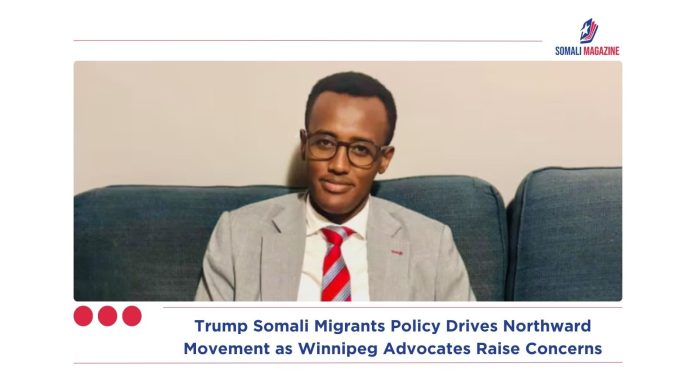
Trump Somali migrants policy is increasingly being linked to a shift in migration patterns, with advocates in Winnipeg warning that more Somali asylum seekers are heading north toward Canada. Community organisations and immigration support groups say stricter enforcement measures and policy changes introduced during the administration of Donald Trump have contributed to a growing sense of uncertainty among migrant communities in the United States.
According to Winnipeg advocates, Somali families and individuals are exploring relocation options as they navigate a tightening immigration environment. These concerns are tied to broader US immigration policy shifts that included increased deportation efforts, travel restrictions affecting several Muslim-majority countries, and reduced pathways for asylum seekers. While some of these policies have evolved over time, their long-term effects continue to shape decision-making among vulnerable groups.
The movement of Somali asylum seekers toward Canada is not entirely new, but observers say recent patterns suggest renewed momentum. Canada border crossings, particularly at unofficial entry points, have seen fluctuations in recent years, often influenced by changes in US immigration enforcement. Advocates note that migrants are frequently motivated by perceptions of Canada’s asylum system as more accessible or humane, though the process remains complex and subject to legal scrutiny.
In Winnipeg, home to a significant Somali diaspora, local organisations have reported increased inquiries from migrants seeking information about relocation, asylum procedures, and settlement support. These groups play a crucial role in providing legal guidance, housing assistance, and community integration services, often stepping in where formal systems face capacity challenges.
Experts caution that migration decisions are rarely driven by a single factor. While the Trump Somali migrants narrative highlights the impact of policy, broader issues such as economic opportunity, family reunification, and personal safety also influence movement. Additionally, international agreements between the United States and Canada, including the Safe Third Country Agreement, complicate asylum claims made at official border crossings, prompting some migrants to seek alternative routes.
The situation underscores the interconnected nature of migration systems in North America. Policy decisions in one country can have ripple effects across borders, shaping not only migration flows but also the experiences of those seeking refuge. For Somali migrants, many of whom have already faced displacement due to conflict and instability, these dynamics add another layer of complexity to their journeys.
Winnipeg advocates continue to call for clearer communication and coordinated policies that prioritise human rights and provide consistent support for asylum seekers. They argue that without such measures, migrants may face increased risks, including unsafe travel conditions and legal uncertainty.
As discussions around immigration policy persist, the experiences of Somali migrants navigating these systems remain a critical part of the broader conversation. The movement northward, as described by advocates, reflects both the challenges and resilience of communities seeking stability in an evolving policy landscape.