
Facebook

Twitter (X)

Instagram

Somali Magazine - People's Magazine
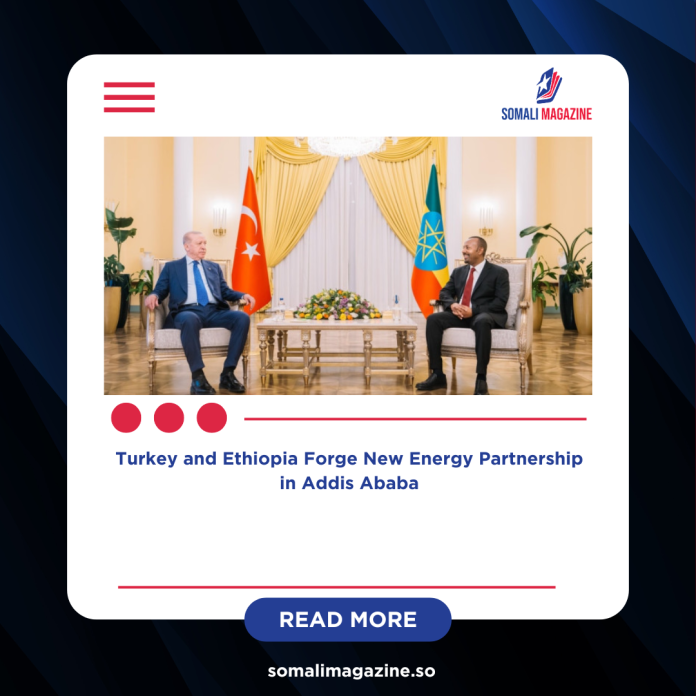
Turkey and Ethiopia have agreed to work more closely together in the energy sector after President Tayyip Erdogan visited Ethiopia’s capital, Addis Ababa. The two countries signed a formal memorandum of understanding that will guide future cooperation, especially in renewable energy and building power infrastructure. This visit was significant because it was Erdogan’s first trip to Ethiopia in 11 years, and it came at the invitation of Ethiopian Prime Minister Abiy Ahmed.
During the visit, the leaders held talks to discuss ways their countries could support each other, particularly in developing new energy projects. After their meeting, officials from both sides took part in a signing ceremony to make the energy agreement official. The Turkish Energy Ministry said this agreement will act as a roadmap for stronger ties and more joint work in energy development.
According to the ministry, Turkey and Ethiopia plan to work together on several key areas. They want to build renewable energy projects, focusing on sources like hydropower that use water to generate electricity. Both sides also agreed to help improve energy efficiency, meaning they will look for ways to produce and use power in smarter, more effective ways. Another important part of the agreement is collaboration on producing and installing equipment for power plants. This includes machinery used in hydroelectric plants and electric turbines, which are key components for turning natural energy into usable electricity.
For Ethiopia, expanding energy infrastructure is a major priority. The country has been investing heavily in developing its power capacity so that it can support economic growth, improve access to electricity for more people, and reduce its reliance on imported fuels. Partnering with Turkey opens new possibilities for technology transfer, investment, and expertise that Ethiopia hopes will help it reach these goals faster.
Turkey’s interest in expanding its energy cooperation with Ethiopia is also part of its broader engagement in East Africa. The two countries have a history of working together on diplomatic and economic issues. For example, in 2024, Turkey played a role in helping to ease tensions between Ethiopia and Somalia over Ethiopia’s plans to build a port in the breakaway region of Somaliland. That diplomatic effort strengthened Ankara’s reputation as a partner in regional conflict resolution and highlighted its interest in stability and development in the Horn of Africa.
While in the region, Turkey continued to expand its activities beyond diplomacy. On Sunday, it sent a deep‑sea drilling vessel named the Cagri Bey to Somalia to begin what Turkey’s Energy Minister Alparslan Bayraktar described as Ankara’s first offshore exploration mission outside Turkey’s own maritime zone. This move signals Turkey’s intention to increase its presence in offshore energy exploration and underscores its broader strategy of building economic and strategic ties in the region.
Erdogan’s visit to Addis Ababa comes at a time when Ethiopia is also strengthening relations with multiple international partners, including countries in Europe, the Middle East, and Asia, to support its development goals. Ethiopia’s leaders see energy cooperation as a key part of that strategy, given the country’s growing energy needs and its potential for renewable energy. Ethiopia already has major hydroelectric facilities, and it continues to explore wind, solar, and geothermal options to diversify its energy mix.
For Turkey, expanding energy partnerships in Africa aligns with its goal of becoming a more influential player in global energy markets. By collaborating on projects in other countries, Turkish companies and engineers gain new opportunities for growth, investment, and innovation. At the same time, Turkey gains political influence and stronger bilateral ties with strategic partners like Ethiopia.
The memorandum signed in Addis Ababa sets the stage for practical cooperation that officials from both countries will now work to turn into real projects. While the agreement itself does not spell out specific investment amounts or timelines, it lays a foundation for future discussions, planning, and joint work. Officials on both sides expressed optimism that this partnership could lead to meaningful progress in energy development that benefits both nations.
Overall, Erdogan’s visit highlighted the importance of energy cooperation in modern international relations, especially between countries with shared interests in development, technology, and economic growth. The deal marks a new chapter in Turkey‑Ethiopia relations, one focused on building sustainable energy solutions and deepening long‑term collaboration.