Facebook

Twitter (X)

Instagram

Somali Magazine - People's Magazine
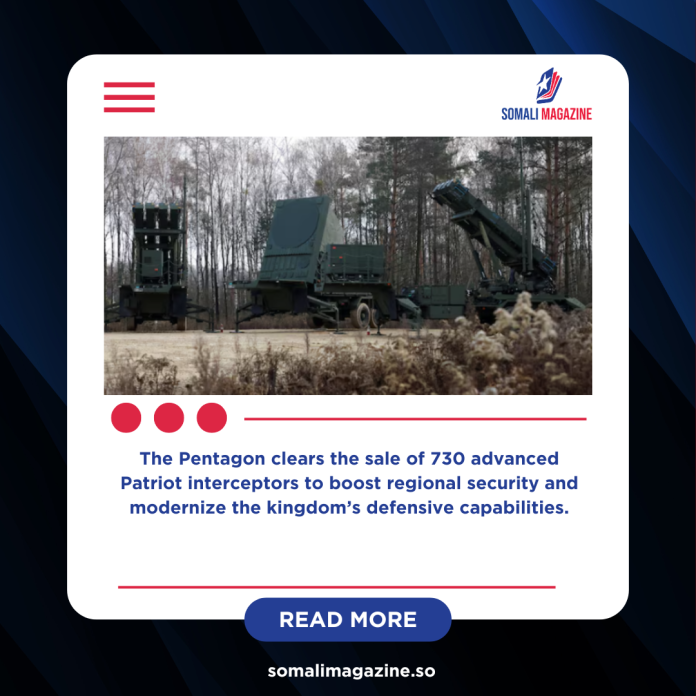
In a significant move to bolster regional defense, the United States State Department has given the green light for a multi-billion dollar arms deal with Saudi Arabia. This potential sale, valued at approximately $9 billion, focuses on the delivery of advanced Patriot interceptor missiles and the specialized equipment required to operate them. According to a formal announcement from the Pentagon, this deal is designed to strengthen Saudi Arabia’s ability to defend its territory against airborne threats, which is a major priority for the kingdom’s national security strategy.
The specific hardware at the center of this deal is the PAC-3 MSE, which stands for Patriot Advanced Capability-3 Missile Segment Enhancement. These are highly sophisticated interceptors known for their precision and ability to neutralize incoming missiles or aircraft. Saudi Arabia formally requested to purchase 730 of these missiles to modernize its existing defense systems. By acquiring such a large volume of these advanced interceptors, the kingdom aims to create a more robust shield against potential attacks, ensuring the safety of its infrastructure and civilian populations.
The Pentagon has identified Lockheed Martin as the lead contractor for this massive undertaking. As a giant in the global defense industry, Lockheed Martin will be responsible for the production and delivery of the PAC-3 MSE units. This partnership underscores the long-standing military relationship between the United States and Saudi Arabia, as the two nations have frequently cooperated on defense initiatives over several decades. Beyond just providing the hardware, such sales often involve long-term technical support and training to ensure the local military can effectively utilize the technology.
While the $9 billion price tag is substantial, U.S. officials have been careful to address the broader implications of the sale. The Pentagon clarified that providing these missiles to Saudi Arabia will not shift the overall military balance in the Middle East. Essentially, the move is seen as a defensive upgrade rather than an offensive escalation. Furthermore, the Department of Defense confirmed that the sale would not negatively affect the United States’ own military readiness. By fulfilling this request, the U.S. can support a key partner in the region while maintaining its own inventory and strategic capabilities.
Ultimately, this approval is a key step in a complex international process. Before the sale is finalized, it must go through various stages of review and congressional notification. If completed, it will represent one of the largest defense contracts in recent years, highlighting the ongoing demand for advanced missile defense technology in volatile regions. The deal reflects a commitment to regional stability through defensive deterrence, ensuring that Saudi Arabia has the tools necessary to protect its borders in an increasingly complex security environment.