
Facebook

Twitter (X)

Instagram

Somali Magazine - People's Magazine
Uganda is planning to connect a new railway line it is developing to another railway currently under construction in neighboring Tanzania. According to a government document seen by Reuters, this move could create a new and more efficient export route for Uganda’s valuable minerals, including gold, copper, and iron ore.
At the moment, most of Uganda’s exports pass through Kenya, mainly via the port of Mombasa. Uganda has already announced plans to link its Standard Gauge Railway (SGR) to Kenya’s railway network, which is also under development. However, progress on that route has been slow, and the new proposal suggests Uganda is now looking to diversify its options.
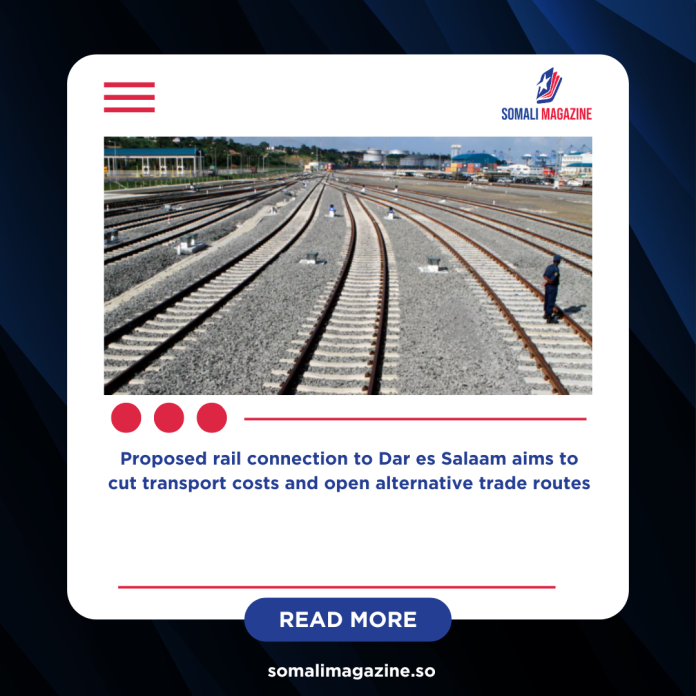
The newly proposed railway would connect Uganda directly to Tanzania’s railway system and eventually to the port of Dar es Salaam. This is the first time Uganda has publicly indicated plans to link its railway to Tanzania’s network. The connection would give Uganda an alternative trade corridor and reduce its dependence on a single export route.
According to Uganda’s Ministry of Works and Transport, the planned railway line would start at the border with Tanzania, pass through the southern and southwestern regions of Uganda, and end in the town of Mpondwe near the border with the Democratic Republic of Congo. This route is strategically important because it passes through areas believed to be rich in mineral resources in both Uganda and Tanzania.
The main goal of the project is to connect mineral-rich regions in the two countries to the port of Dar es Salaam more efficiently. By doing so, Uganda hopes to reduce transport time and lower shipping costs. Faster and cheaper transport could make Uganda’s mineral exports more competitive on the global market and attract more investment into the mining sector.
The document also indicates that the African Development Bank (AfDB) could play a key role in financing the project. While full funding has not yet been approved, the AfDB confirmed that it is reviewing a request to support early preparation activities for the railway. These activities would likely include feasibility studies, technical assessments, and environmental reviews to determine whether the project is viable.
An AfDB official said the bank would consider financing the railway depending on the results of these studies. If the project proves to be financially sound and sustainable, the bank may move forward with funding.
The plan could also benefit the Democratic Republic of Congo in the future. The document suggests that Congo may eventually seek to connect to the railway line, which would expand the regional transport network even further. This would strengthen trade links between East and Central Africa and potentially boost economic integration in the region.
Although Uganda’s Ministry of Works and Transport did not immediately comment on the details of the proposal, the project signals the country’s broader ambition to improve infrastructure and strengthen its export capacity. With growing mineral production and increasing regional trade opportunities, having multiple transport routes could give Uganda greater flexibility and economic security.
If successfully developed, the railway link to Tanzania would not only open a new export gateway through Dar es Salaam but also enhance cooperation between neighboring countries. By reducing transport costs and travel time, the project could support industrial growth, increase cross-border trade, and create new economic opportunities across the region.