Facebook

Twitter (X)

Instagram

Somali Magazine - People's Magazine
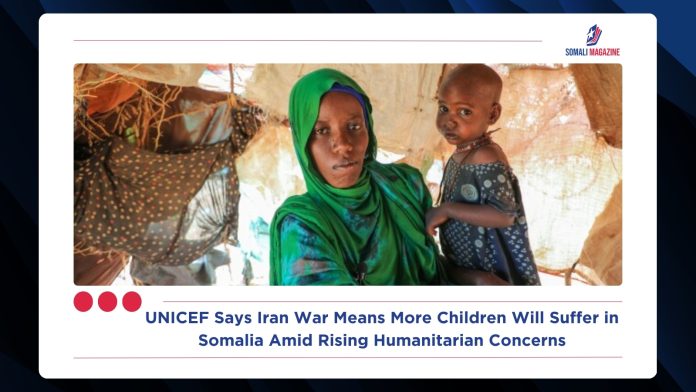
UNICEF says Iran war means more children will suffer in Somalia, warning that the ripple effects of global conflict are likely to deepen an already fragile humanitarian situation. The agency has raised concerns that shifting international priorities and funding pressures could significantly affect vulnerable communities, particularly children who rely on consistent humanitarian support.
According to UNICEF, Somalia remains one of the countries most dependent on international aid, with millions of children facing risks related to malnutrition, limited access to education, and inadequate healthcare. The escalation of tensions involving Iran has diverted global attention and resources, creating uncertainty around funding pipelines that sustain life-saving programs in the Horn of Africa.
Humanitarian experts note that global conflict impact aid often extends far beyond the immediate region of war. When donor countries reallocate budgets to address emerging crises, ongoing programs in countries like Somalia can experience shortfalls. These funding gaps can disrupt essential services, including food distribution, vaccination campaigns, and emergency education initiatives.
Recent assessments highlighted in the UNICEF Somalia report indicate that children in drought-affected areas are particularly at risk. With climate-related challenges already straining resources, any reduction in aid could worsen conditions for families struggling to meet basic needs. Aid organizations warn that the combination of environmental stress and financial constraints may lead to increased displacement and heightened vulnerability among children.
Government officials in Somalia have acknowledged the concerns raised by UNICEF, emphasizing the need for sustained international support. They have called on global partners to ensure that humanitarian commitments are not overshadowed by shifting geopolitical dynamics. Maintaining stability in aid funding is seen as critical to preventing further deterioration of the situation.
The broader Somalia humanitarian crisis has been shaped by years of conflict, economic challenges, and environmental shocks. While progress has been made in certain areas, the system remains highly sensitive to external disruptions. Analysts argue that the current situation underscores the interconnected nature of global crises, where events in one region can have far-reaching consequences elsewhere.
As UNICEF says Iran war means more children will suffer in Somalia, the message serves as a stark reminder of the need for balanced global responses. Ensuring that vulnerable populations are not overlooked requires coordinated efforts from governments, international organizations, and donors. For millions of Somali children, the continuity of aid programs could mean the difference between resilience and hardship.