
Facebook

Twitter (X)

Instagram

Somali Magazine - People's Magazine
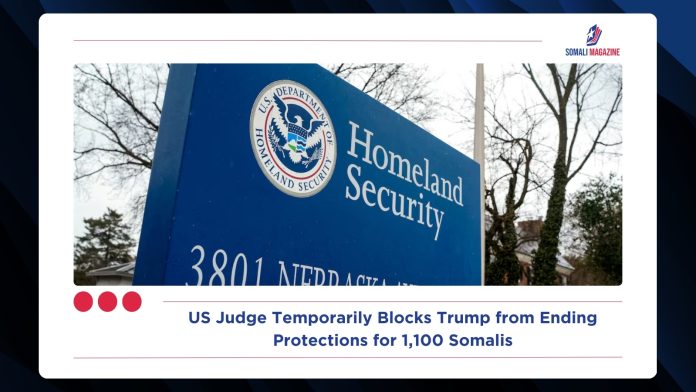
US judge temporarily blocks Trump from ending protections for 1,100 Somalis in a decision that has drawn attention from immigrant advocacy groups and the Somali diaspora across the United States. The ruling, issued by a federal court, temporarily prevents the termination of protections that allow Somali nationals to remain and work legally in the country under a humanitarian immigration program.
The legal decision centers on Temporary Protected Status Somalis have relied on for years due to ongoing instability and humanitarian concerns in Somalia. TPS is a program created by the United States government that allows people from countries facing armed conflict, environmental disasters, or extraordinary conditions to live and work temporarily in the U.S. without fear of deportation.
In this case, immigration advocates challenged efforts by the Trump administration to end the protections for approximately 1,100 Somali immigrants United States officials had previously recognized as eligible for the program. Lawyers representing the affected community argued that conditions in Somalia—including security challenges and humanitarian risks—continue to justify the continuation of TPS.
As a result, the court ruled that the administration could not immediately move forward with the policy change while the legal challenge is ongoing. The decision means that the group of Somali nationals will retain their legal protections and work authorization until further court proceedings determine the program’s future.
Legal experts say the ruling reflects the complexity of the TPS legal battle that has unfolded in U.S. courts in recent years. The program has been the subject of political debate, with some policymakers advocating stricter immigration policies while others emphasize the humanitarian purpose of TPS protections.
Advocacy groups welcomed the court’s intervention, noting that many Somali immigrants United States communities depend on TPS to maintain stable lives, employment, and family ties. For many beneficiaries, the program has allowed them to contribute economically and socially to their local communities while staying connected to relatives in Somalia.
Supporters of maintaining the protections also point to the continuing security challenges in Somalia, including threats from militant groups and periodic humanitarian crises caused by droughts and floods. They argue that forcing TPS recipients to return under such circumstances could expose them to serious risks.
Government representatives have previously argued that TPS was intended to be temporary and that long-term immigration status should be addressed through broader legislative reforms. However, courts have increasingly become a central arena where the future of TPS protections is contested.
For now, the fact that a US judge temporarily blocks Trump from ending protections for 1,100 Somalis offers temporary relief for the affected community. While the broader immigration debate continues, the court’s decision ensures that Somali TPS holders can continue living and working legally in the United States while the case proceeds through the legal system.