
Facebook

Twitter (X)

Instagram

Somali Magazine - People's Magazine
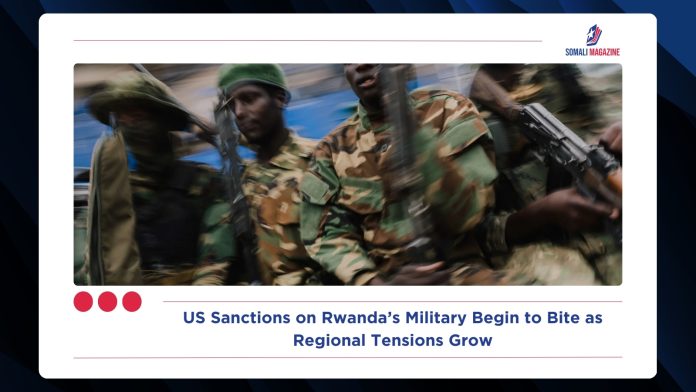
US sanctions on Rwanda’s military begin to bite as diplomatic pressure mounts over the country’s alleged role in the ongoing conflict in eastern Democratic Republic of Congo (DRC). The measures, introduced by Washington earlier this year, are now starting to affect key military networks and financial channels linked to Rwanda’s security establishment, according to analysts and international observers.
The sanctions were imposed amid growing concerns from the United States and several Western governments about Rwanda’s reported support for armed groups operating in eastern Congo, particularly the M23 rebel movement. Kigali has repeatedly denied direct involvement in the Rwanda DR Congo conflict, arguing instead that its actions are focused on protecting national security and addressing cross-border threats.
As US sanctions on Rwanda’s military begin to bite, experts say the restrictions are designed to increase diplomatic pressure while limiting financial and logistical resources connected to the country’s defense institutions. The measures target individuals and entities accused of supporting military operations linked to instability in eastern Congo, including restrictions on financial transactions and access to certain international markets.
Eastern Congo has experienced decades of conflict fueled by ethnic tensions, competition over mineral resources, and the presence of numerous armed groups. The resurgence of M23 rebels in recent years has reignited regional tensions and raised fears of a broader confrontation involving neighboring countries.
International organizations and regional bodies have called for renewed dialogue to de-escalate the crisis. The African Union and the East African Community have both supported diplomatic efforts aimed at encouraging negotiations between the Congolese government and armed factions, while also urging regional governments to avoid actions that could intensify the conflict.
Within Rwanda, officials have criticized the sanctions, describing them as politically motivated and unfair. Government representatives argue that Rwanda continues to face security threats from militant groups based in eastern Congo, including factions linked to perpetrators of the 1994 genocide. According to Kigali, regional security challenges cannot be addressed without acknowledging these ongoing risks.
However, as US sanctions Rwanda military leaders face begin to take effect, analysts believe the measures could complicate Rwanda international relations, particularly with Western partners that have historically supported the country’s development and peacekeeping contributions. Rwanda has been widely recognized for its participation in international peacekeeping missions and its role in regional stability efforts in parts of Africa.
Diplomatic observers say the situation reflects a broader pattern of Central Africa security tensions, where regional conflicts frequently intersect with global political interests. The effectiveness of sanctions as a policy tool remains debated, with some experts arguing that economic pressure can encourage dialogue, while others warn it may harden political positions.
For now, the fact that US sanctions on Rwanda’s military begin to bite marks a new phase in the international response to the Rwanda DR Congo conflict. Whether the measures will influence policy decisions in Kigali or contribute to easing tensions in eastern Congo remains an open question as regional diplomacy continues to unfold.