
Facebook

Twitter (X)

Instagram

Somali Magazine - People's Magazine
The United Nations World Food Programme (WFP) has warned that its life-saving food and nutrition support in Somalia could completely stop by April if new funding is not secured. This could leave millions of vulnerable people without help at a time when hunger is already rising across the country.
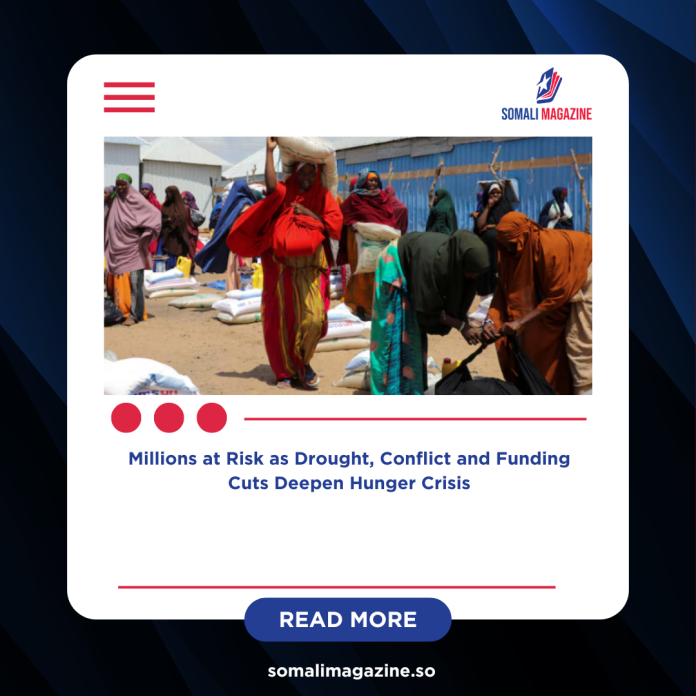
According to the agency, about 4.4 million people in Somalia are currently facing crisis-level food insecurity. Out of that number, nearly one million people are experiencing severe hunger and struggling to survive. The situation has been caused by a combination of failed rainy seasons, ongoing conflict, and a steady drop in humanitarian funding.
WFP officials say the crisis is getting worse quickly. Ross Smith, the organization’s Director of Emergency Preparedness and Response, described the situation as alarming. He said many families have already lost their livestock, crops, and sources of income due to repeated droughts and instability. Without urgent food assistance, he warned, conditions will deteriorate even further.
Somalia declared a national drought emergency in November after several rainy seasons failed. The lack of rainfall has devastated farming communities and reduced water availability for both people and animals. Many rural families have been forced to leave their homes in search of food, water, and aid. Other countries in the region have also been affected by similar climate challenges, adding pressure to humanitarian agencies working across East Africa.
The World Food Programme, which is the largest humanitarian organization operating in Somalia, says it has already been forced to significantly reduce the number of people it assists due to funding shortages. Earlier this year, the agency was supporting about 2.2 million people. Now, that number has dropped to just over 600,000. This sharp reduction means millions who once relied on regular food support are no longer receiving help.
Nutrition programs have also been severely affected. Pregnant women, breastfeeding mothers, and young children—who are among the most vulnerable to malnutrition—have seen services scaled back. Without proper nutrition, children face a higher risk of stunted growth, illness, and even death. Health experts warn that cutting nutrition programs during a hunger crisis can have long-term consequences for an entire generation.
The agency says the current situation is dangerously similar to the crisis in 2022, when Somalia was on the brink of famine. At that time, large-scale international funding and emergency action helped prevent a full-scale famine. However, WFP officials caution that without quick financial support now, the country could again face catastrophic levels of hunger.
To continue its operations between March and August, the World Food Programme is urgently seeking $95 million. This funding would allow the agency to maintain food distributions, nutrition services, and emergency assistance to communities most at risk.
Ross Smith warned that if the already reduced assistance comes to an end, the consequences would not only affect Somalia but could also have wider humanitarian, security, and economic impacts across the region. Hunger and displacement often lead to instability, increased migration, and additional strain on neighboring countries.
Aid agencies are calling on international donors to act quickly to prevent the situation from spiraling into a full-blown catastrophe. For millions of Somali families already living on the edge, continued support could mean the difference between survival and disaster.