
Facebook

Twitter (X)

Instagram

Somali Magazine - People's Magazine
Somalis across the country reacted with anger and disappointment on Wednesday following controversial remarks made by former U.S. President Donald Trump. During a cabinet meeting the previous day, Trump referred to Somalis as “garbage” and claimed, “we don’t want them in our country,” comments that many Somalis found deeply offensive and insulting. He went on to say that Somalis “run around killing each other” and described their homeland in crude terms. Trump has a long history of making racially charged and provocative statements, but his latest comments struck a particularly painful chord among Somalis who already feel unfairly targeted.
For many Somalis, both inside the country and abroad, Trump’s remarks felt like an attack not only on their identity but also on their dignity. Abdisalan Omar, an elder from central Somalia, said he was shocked and saddened by the language Trump used. He emphasized that respectful communication is important for leaders and expressed concern that remarks like these worsen global tensions instead of fostering understanding. According to Omar, the world should condemn such language because presidents are expected to help build peace, not provoke anger.
Trump’s comments came at a time when he has been increasing his criticism of immigrants from Somalia. After a recent shooting incident in Washington, in which two National Guard soldiers were killed, Trump promised to further restrict migration from what he called “third-world countries.” The person charged in that case, however, was an Afghan national, not Somali, and has pleaded not guilty. Despite this, Trump intensified his focus on Somali immigrants, especially those living in Minnesota, claiming—without offering evidence—that “Somali gangs” were terrorizing communities there. Local officials strongly rejected his description, saying it was misleading and harmful.
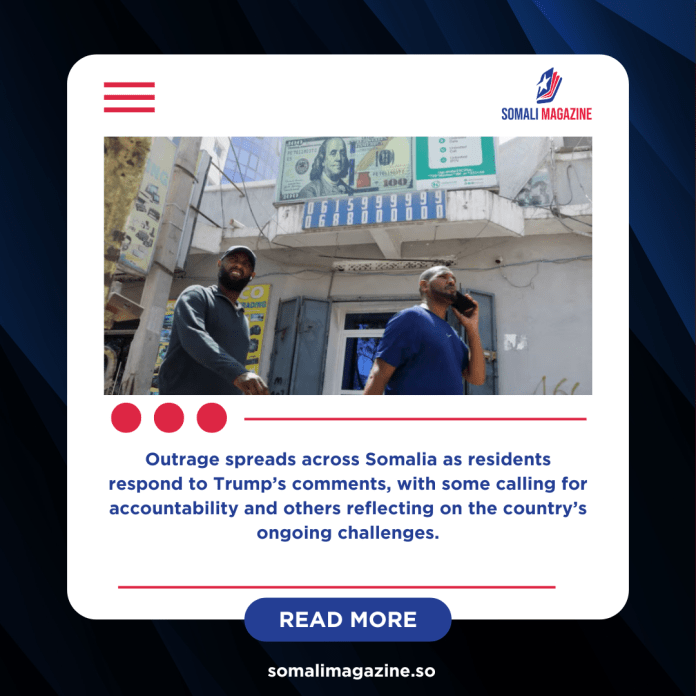
In Mogadishu, many residents expressed their frustration with Trump’s statements. A construction worker named Bule Ismail said that in Somali culture, people avoid using abusive or degrading language, especially in public settings. He argued that Americans themselves should be the first to challenge Trump’s behavior, saying leaders must be held accountable when they speak irresponsibly. Some even suggested that such extreme comments raise questions about his judgment.
While many Somalis were outraged, the country’s Prime Minister, Hamza Abdi Barre, chose a more diplomatic approach. Speaking at an innovation summit in Mogadishu, he noted that Trump has made offensive remarks about other African countries before, including Nigeria and South Africa. Barre said not every statement deserves a response and sometimes it’s better to ignore comments meant to provoke attention. His stance suggested that Somalia should focus on its own progress rather than getting caught up in every controversy.
Somalia continues to face significant challenges, including long-standing violence, poverty, and the ongoing threat from al Shabaab, an extremist group linked to al Qaeda. The group has been fighting for nearly two decades to overthrow the government, contributing to instability that affects daily life for millions of Somalis. These difficult circumstances often influence how people interpret outside criticism: some see it as unfair, while others view it as a reminder of problems that still need to be solved.
A smaller number of Somalis reacted differently to Trump’s comments. Some believed that while his wording was offensive, the issues he pointed to reflect real frustrations with the state of governance in Somalia. Mogadishu resident Samira Abdullahi, who says her land was taken by authorities, argued that Somalia’s political system continues to struggle and that corruption and insecurity remain widespread. She felt Trump’s remarks, although harsh, highlighted the painful reality Somalis live with every day.
Overall, Trump’s comments sparked a mix of anger, disappointment, and reflection among Somalis. Many felt insulted, while others saw the moment as an opportunity to look inward at the challenges facing their country. But across all viewpoints, there was a shared sense that respectful leadership matters—whether in Somalia, the United States, or anywhere else in the world.