Facebook

Twitter (X)

Instagram

Somali Magazine - People's Magazine
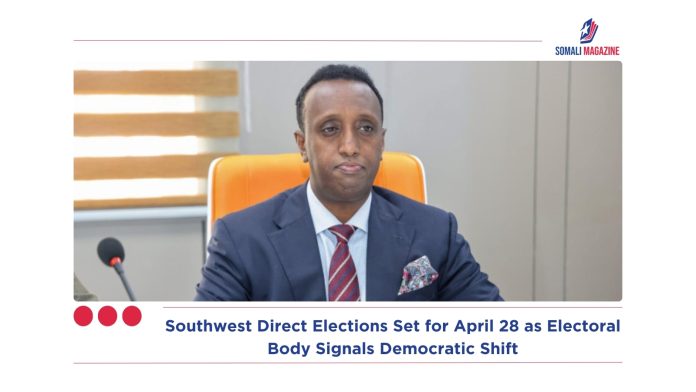
Southwest direct elections are set to take place on April 28, marking a significant step in Somalia’s evolving democratic process, according to the electoral authorities in Southwest State. The announcement signals a shift toward broader political participation, as residents prepare to vote directly for parliamentary and local representatives in a region long shaped by indirect electoral systems.
The Southwest State electoral body confirmed that preparations are underway to facilitate the vote, which will include both parliamentary elections Somalia has traditionally conducted through clan-based delegate systems, and local council contests. Officials say the move toward Southwest direct elections reflects growing efforts to align regional governance with universal suffrage principles outlined in Somalia’s federal roadmap.
This development comes at a critical time for Somalia elections, as the country continues to navigate the transition from indirect voting models to a one-person, one-vote system. For years, political representation has largely been determined through clan elders and appointed delegates, a structure designed to maintain stability during periods of conflict but often criticised for limiting inclusivity and accountability.
Authorities in the regional capital, Baidoa, have indicated that logistical arrangements are being finalised, including voter registration, polling station setup, and security deployment. Ensuring a safe and transparent process remains a top priority, particularly in light of ongoing security challenges posed by militant groups such as Al-Shabaab, which have previously targeted electoral activities.
The push for Southwest direct elections is widely viewed as a test case for broader electoral reform across Somalia. If successfully implemented, it could provide a model for other federal member states seeking to transition toward direct voting systems. Political analysts note that such reforms are essential for strengthening democratic institutions and fostering public trust in governance.
Federal leaders have repeatedly emphasised the importance of inclusive political processes in stabilising the country. While the journey toward full electoral reform remains complex, initiatives like the upcoming vote in Southwest State suggest incremental progress. Observers from civil society organisations and international partners are expected to monitor the elections closely, assessing their credibility and adherence to democratic standards.
At the local level, the introduction of direct voting is anticipated to reshape political dynamics, giving communities a more immediate voice in leadership selection. Advocates argue that local elections Somalia conducts through direct participation can enhance accountability and improve service delivery, particularly in regions where governance structures are still consolidating.
However, challenges remain. Limited infrastructure, voter education gaps, and security concerns could affect turnout and implementation. The success of the April 28 vote will depend heavily on coordination between regional authorities, federal institutions, and security agencies.
As the date approaches, the spotlight will be firmly on Southwest State and its ability to deliver a credible electoral process. For many citizens, the prospect of casting a direct vote represents more than a procedural change—it is a moment that could redefine political participation in Somalia.