
Facebook

Twitter (X)

Instagram

Somali Magazine - People's Magazine
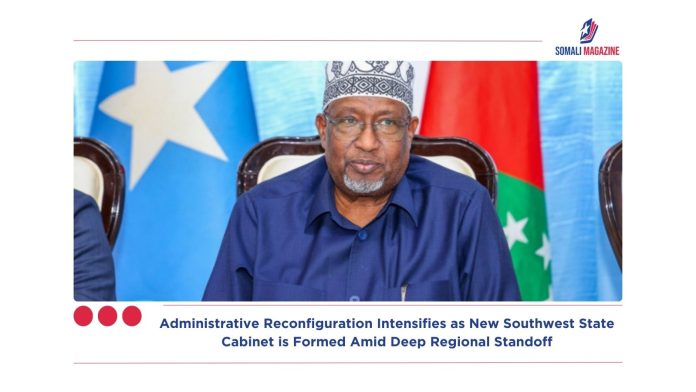
The official announcement of the new Southwest State Cabinet has introduced a fresh layer of complexity to the delicate governance structure of the Horn of Africa as regional leaders struggle to solidify administrative control. Newly elected Southwest State President Adan Mohamed Nur Madobe unveiled the comprehensive ministerial lineup from the de facto capital of Baidoa, aiming to establish an inclusive executive team capable of managing pressing regional public services. This critical restructuring follows months of intense institutional volatility within the strategic federal member state, which plays a pivotal role in the country’s collective economic and security architecture. By positioning a diverse mix of technocrats and local political figures across key portfolios, the current leadership seeks to project governance stability while actively preparing the territory for upcoming universal suffrage local elections.
However, the political configuration remains deeply fractured due to an active political dispute involving former regional president Abdiaziz Hassan Mohamed Lafta-Gareen. The former administration, which wielded authority in the region for seven years, was ousted earlier this season following a highly contentious federal military campaign that dramatically altered the local balance of power. Supporters of the former executive have vehemently rejected the legitimacy of the recent regional parliamentary election, characterizing the process as an unconstitutional intervention directed by central authorities in Mogadishu. Opposition coalitions, including the influential Somali Future Council, maintain that bypassing established local consultation processes risks deepening preexisting clan-based grievances and further fracturing the regional state’s delicate social cohesion.
The multi-layered dispute has raised significant security concerns across the territory, particularly as rival military units continue to monitor each other’s movements around critical provincial corridors. Previous efforts by a designated interim administration to manage the volatile transition faced brief armed resistance and severe pushback from local factions aligned with the previous leadership. Observers note that while the federal government of Somalia has strongly endorsed the new cabinet assembly as a necessary bridge toward democratization, the ongoing political friction threatens to stall vital counter-terrorism operations against al-Shabaab networks operating along the borders of the Bay and Bakool provinces.
As the newly appointed ministers prepare to take their official oaths of office, independent analysts stress that the long-term viability of the administration hinges on its capacity to initiate an authentic local reconciliation dialogue. Overcoming the deep institutional standoff will require the current leadership to look past immediate political rivalries and forge functional compromises with aggrieved opposition blocks. The international community continues to closely monitor the developments in Baidoa, maintaining that safeguarding the state’s hard-won progress requires balancing strong security measures with inclusive, transparent governance that respects the democratic aspirations of the diverse population.