
Facebook

Twitter (X)

Instagram

Somali Magazine - People's Magazine
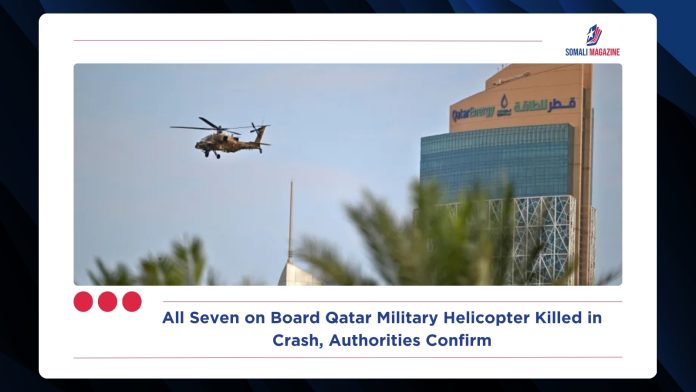
All seven on board Qatar military helicopter killed in crash, in a tragic incident that has prompted an urgent investigation and renewed attention to aviation safety protocols in the region. Authorities confirmed that the aircraft, operated by the Qatar Armed Forces, went down during what was described as a routine mission.
Initial reports indicate that the helicopter crashed in a remote area, with emergency response teams dispatched immediately after contact with the aircraft was lost. Despite rapid deployment, officials confirmed that there were no survivors among the seven personnel on board. The identities of the victims have not been publicly disclosed pending notification of their families.
The Qatar helicopter crash has triggered a formal aviation safety investigation led by military and civil aviation authorities. While the exact cause remains unknown, experts say such inquiries typically examine a range of factors, including mechanical failure, weather conditions, and human error. Officials have urged caution against speculation as investigators begin gathering evidence from the crash site.
Military aviation accident cases often involve complex technical assessments, with investigators analyzing flight data, maintenance records, and operational procedures. In this instance, the involvement of the Qatar defense forces means the inquiry will likely include internal reviews alongside potential collaboration with international aviation experts.
Aviation safety investigation processes are critical in identifying systemic issues and preventing future incidents. Over the years, global aviation standards have evolved through lessons learned from similar tragedies, leading to improved training, stricter maintenance protocols, and enhanced safety systems.
The loss has been met with an outpouring of condolences from both domestic and international leaders. Officials have described the incident as a significant loss for the nation, recognizing the service and dedication of the personnel involved. Tributes have highlighted the risks faced by military crews, even during routine operations.
In recent years, attention to helicopter crash cause analysis has increased, particularly as military and civilian aviation sectors seek to reduce accident rates. Advances in technology, including real-time monitoring systems and improved aircraft design, have contributed to enhanced safety, though challenges remain.
As All seven on board Qatar military helicopter killed in crash continues to resonate, the focus now shifts to the findings of the investigation and the steps that may follow. For the families of those lost, the tragedy is deeply personal, while for the wider aviation community, it serves as a reminder of the importance of vigilance and continuous improvement.
The coming weeks are expected to bring more clarity as investigators work to determine the sequence of events leading to the crash, with the aim of preventing similar incidents in the future.