
Facebook

Twitter (X)

Instagram

Somali Magazine - People's Magazine
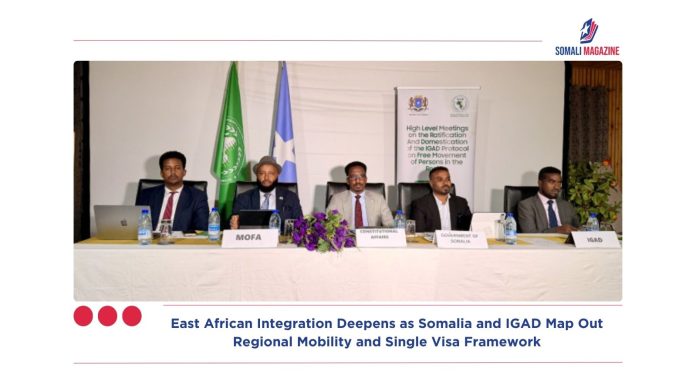
The development of a unified regional mobility roadmap took a major step forward as high-level consultations commenced in Mogadishu between the Federal Government of Somalia and representatives from the Intergovernmental Authority on Development. The three-day conference aims to chart a definitive path for the ratification and domestication of the IGAD Protocol on Free Movement of Persons. By convening key institutional stakeholders, ministries, and regional experts, the collaborative platform seeks to establish an administrative and legal framework that safely eases restrictions on the cross-border movement of people and commercial goods. Central to these diplomatic discussions is the introduction of a single visa framework, an initiative patterned after similar successful passport-free zones, which would allow eligible travelers to move seamlessly across participating borders in the Horn of Africa.
According to officials present at the Mogadishu consultations, the proposed updates to regional travel management are designed to support socio-economic development without compromising national security or overriding domestic immigration laws. The implementation plan incorporates advanced security measures, including an interoperable digital identification system shared among IGAD member states, ensuring that cross-border travel remains predictable and strictly regulated. Regional administrators note that citizens across the territory are already frequently migrating due to labor demands, educational opportunities, commercial trade, family reunification, and displacement triggered by severe climate-related events. Transitioning these existing migration flows into a formalized legal infrastructure is widely viewed by experts as a critical step toward maximizing regional stability and securing human rights.
Somali foreign policy leaders expressed optimism about hosting the milestone event, stating that the collaborative effort reinforces the country’s strategic geographical positioning as a critical hub for maritime and terrestrial trade. From an economic perspective, the removal of strict entry boundaries is expected to significantly bolster the African Continental Free Trade Area objectives by lowering logistical costs and encouraging cross-border investment. Beyond the economic integration benefits, the comprehensive freedom of movement framework is anticipated to provide a flexible mechanism for populations needing to adapt to seasonal environmental shocks and localized droughts by enabling them to legally seek temporary relief in neighboring areas.
While the technical details and implementation matrices of the single visa framework require formal legislative approval from individual member capitals, the launch of the consultations underscores a growing political consensus in the Horn of Africa. Observers point out that previous integration efforts in the region have occasionally suffered from implementation gaps between signed treaties and domestic enforcement. However, the concurrent push for automated digital identity verification and harmonized security protocols reflects a more pragmatic, data-driven approach to regional governance. As technical working groups continue to refine the national strategy over the coming months, the evolving collaboration between Somalia and its regional partners represents a concrete effort to balance sovereign security with the undeniable benefits of a more connected East African economy.