
Facebook

Twitter (X)

Instagram

Somali Magazine - People's Magazine
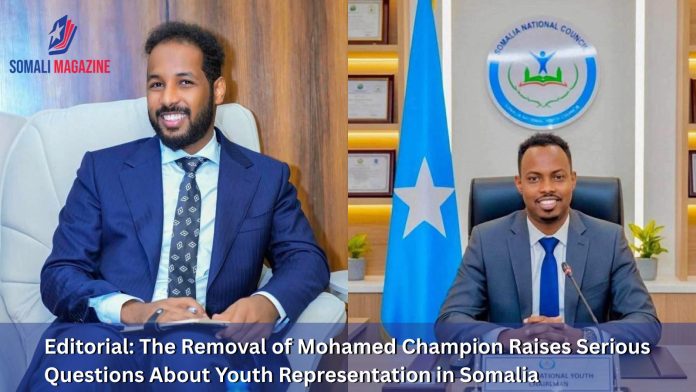
The dismissal of National Youth Council of Somalia (NYCS) Chairman Mohamed Ali Siyaad (Mohamed Champion) has sparked widespread concern among Somali youth and reignited a broader debate about the state of civic participation and freedom of expression in the country.
For many young Somalis, Mohamed Champion was more than just the chairman of a government-affiliated institution. He was seen as a vocal advocate for youth empowerment, participation, and accountability. His removal by the Minister of Youth and Sports, Mohamed Abdulkadir Ali, has therefore been interpreted by many as a setback for youth representation rather than a routine administrative decision.
The public reaction has been swift and overwhelmingly supportive of the former chairman. Across social media, youth activists, students, professionals, and members of the Somali diaspora have questioned why a leader who consistently highlighted the challenges facing young people was removed from office.
Particularly troubling to many supporters were Mohamed Champion’s previous statements that he was not receiving a salary and that the National Youth Council lacked a dedicated office. If accurate, these revelations suggest that the institution responsible for representing Somalia’s youth was operating without adequate support from the very authorities tasked with empowering it.
Critics argue that the government’s relationship with independent youth voices has become increasingly strained. They point to cases involving youth activists and protest participants who have reportedly faced arrests, detention, or intimidation after expressing views that differ from those of the government. Human rights advocates and civil society groups have repeatedly raised concerns about shrinking civic space and the treatment of young activists who engage in peaceful political expression.
Among the cases frequently cited by critics is that of Sadia Bajaaj, a young mother and activist whose detention has attracted attention from supporters who argue that peaceful participation in public demonstrations should not result in imprisonment. For many young people, such cases symbolize what they see as a growing intolerance toward dissenting voices.
The removal of Mohamed Champion is therefore being viewed by some not as an isolated event, but as part of a wider pattern in which independent youth leaders face obstacles when challenging the status quo or demanding greater accountability from public institutions.
A confident government should not fear criticism from its youth. On the contrary, it should welcome engagement, debate, and constructive dissent as essential components of a healthy democracy. Young people are not merely the future of Somalia—they are its present. Their voices, concerns, and aspirations deserve to be heard, not sidelined.
The controversy surrounding Mohamed Champion’s dismissal presents an opportunity for the government to rebuild trust with Somalia’s youth. Transparency regarding the reasons for his removal, greater support for youth institutions, and a commitment to protecting peaceful civic participation would send a powerful message that the government values the contributions of young citizens.
As Somalia continues its journey toward stability and development, empowering youth leaders and safeguarding civic freedoms should remain national priorities. The country’s progress depends not only on political institutions but also on the confidence of the young generation that their voices matter and that their participation is welcomed rather than discouraged.
Author :
Ridwan Yusuf Mohamud
Editor in Chief of Somali Magazine