Facebook

Twitter (X)

Instagram

Somali Magazine - People's Magazine
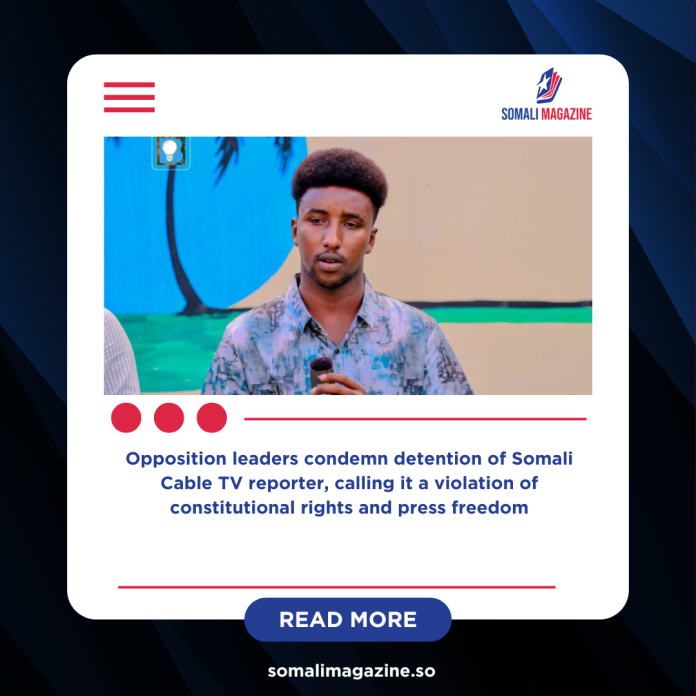
Somali Cable TV journalist Abdihafid Nur Barre was arrested on Tuesday in Mogadishu’s Waaberi district, according to his employer. The station said military forces carried out the arrest but noted that no official explanation had been given by the country’s security agencies about why he was detained.
The lack of clarity surrounding the arrest has raised concern among media professionals and political leaders. Somali Cable TV confirmed the incident in a public statement, saying their journalist was taken into custody without prior notice or a clear reason. By the time of reporting, authorities had not issued a formal statement outlining the charges or legal basis for the detention.
The arrest quickly sparked criticism from members of the Somali Future Council and several well-known political figures. Former President Sheikh Sharif Sheikh Ahmed strongly condemned the move, saying the detention did not align with Somalia’s legal and constitutional framework. He called for Abdihafid’s immediate release and urged the government to respect the rule of law.
Presidential candidates Abdi Farah Shirdoon, Hassan Ali Khaire, and Mohamed Hussein Rooble also issued a joint statement criticizing the arrest. They described it as an attack on independent journalism and a violation of constitutional rights that guarantee freedom of expression and media freedom. The leaders argued that journalists must be allowed to carry out their work without fear of intimidation or detention.
In their statement, the three candidates urged the administration of President Hassan Sheikh Mohamud to release Abdihafid unconditionally. They emphasized the importance of ensuring his safety and protecting his fundamental rights while in custody. According to them, any action against a journalist should follow due legal process and be clearly communicated to the public.
The arrest comes at a time of rising political tension in Somalia. The country is currently facing heated debates over upcoming elections and proposed constitutional reforms. Opposition leaders have been increasingly vocal about their concerns regarding governance, accountability, and democratic practices. In this environment, actions perceived as targeting the media are likely to attract strong reactions.
Media rights advocates have also expressed growing concern about press freedom in Somalia. Journalists often operate in a challenging environment, dealing with security risks, political pressure, and limited institutional protections. Incidents like this add to fears that space for independent reporting could be shrinking.
Supporters of Abdihafid argue that a free press is essential for transparency and democracy. They say journalists play a critical role in informing the public, especially during politically sensitive periods. Detaining reporters without clear justification, they warn, can create a climate of fear that discourages open discussion and public scrutiny.
As of now, it remains unclear what specific allegations, if any, have been brought against Abdihafid Nur Barre. Observers say the government’s response in the coming days will be closely watched, both locally and internationally. Many are calling for transparency, adherence to legal standards, and respect for constitutional rights.
The situation highlights the broader debate over press freedom and political accountability in Somalia. With tensions already high over electoral and constitutional matters, the handling of this case may have wider implications for the country’s democratic trajectory and its commitment to protecting fundamental freedoms.