Facebook

Twitter (X)

Instagram

Somali Magazine - People's Magazine
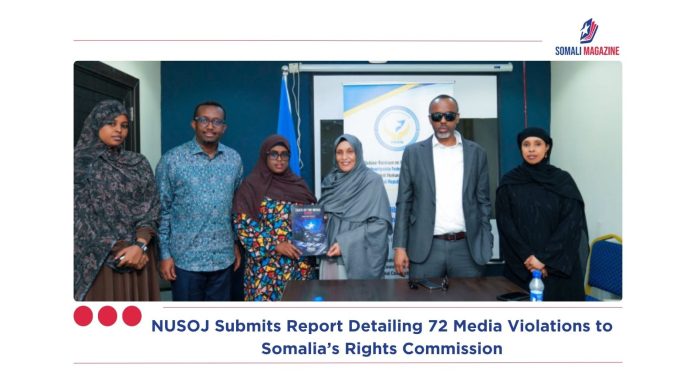
National Union of Somali Journalists (NUSOJ) has submitted a report documenting 72 alleged media violations to Somalia’s National Human Rights Commission, raising fresh concerns about press freedom and the safety of journalists in the country.
According to NUSOJ, the report outlines a range of incidents affecting media professionals, including arrests, harassment, intimidation, and restrictions on reporting. The organization stated that the cases were recorded over a specific reporting period, though full details of each incident have not been independently verified by all sources at the time of publication.
The NUSOJ report 72 media violations Somalia submission is intended to prompt investigation and accountability through official human rights mechanisms. NUSOJ has called on authorities to take action to address the alleged abuses and ensure that journalists can operate without fear of reprisal. The group also emphasized the importance of aligning national practices with international standards on freedom of expression.
Officials from Somalia’s National Human Rights Commission have acknowledged receipt of the report, according to statements cited in local media, and indicated that the cases will be reviewed as part of their mandate. However, the commission has not yet released a detailed public response outlining next steps or timelines for investigation.
Media analysts note that Somalia has made progress in rebuilding its media sector over the past decade, but challenges remain, particularly in areas affected by insecurity and political tensions. Journalists working in such environments often face risks from multiple actors, including state authorities, armed groups, and local power structures.
The NUSOJ report 72 media violations Somalia findings add to a broader pattern highlighted by international watchdogs, which have previously raised concerns about the vulnerability of journalists in the country. Experts say that strengthening legal protections and enforcement mechanisms will be critical to improving conditions.
At the same time, government representatives have in past statements emphasized their commitment to protecting press freedom, while also citing the need to balance security concerns. Observers note that this balance continues to shape the operating environment for media organizations.
The submission of the report may serve as a catalyst for renewed dialogue between stakeholders, including government institutions, media groups, and civil society. However, the extent to which the findings lead to concrete action will depend on follow-up investigations and policy responses.
As the situation develops, the NUSOJ report 72 media violations Somalia case underscores the ongoing challenges facing journalists and the importance of sustained efforts to uphold media rights in the country.