
Facebook

Twitter (X)

Instagram

Somali Magazine - People's Magazine
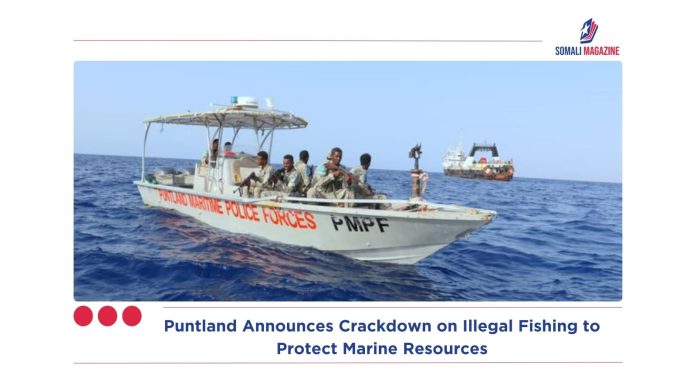
The Puntland illegal fishing crackdown has been formally announced by regional authorities, as officials move to address growing concerns over the depletion of marine resources and the impact on coastal communities. The initiative, led by Puntland’s Ministry of Fisheries and Marine Resources, aims to strengthen enforcement against unauthorized fishing activities along the region’s extensive coastline.
According to officials, the Puntland illegal fishing crackdown will target both foreign vessels and local operators engaged in unregulated practices. Authorities say such activities have contributed to declining fish stocks and environmental damage, raising concerns about long-term sustainability and economic stability for local fishermen.
Government representatives indicated that enforcement measures will include increased coastal surveillance and closer coordination with security forces. Reports suggest that maritime patrols and monitoring systems will be expanded to detect and deter illegal fishing operations, although specific operational details have not been fully disclosed.
Illegal fishing Somalia waters has been a persistent issue for years, with officials and international observers warning about the scale of unregulated exploitation. Studies have previously estimated significant losses to the national economy due to foreign trawlers operating without authorization, often using methods that damage marine ecosystems.
Puntland authorities have emphasized that the crackdown is also intended to support local livelihoods. By reducing illegal competition, officials say the initiative could help ensure that coastal communities benefit more directly from marine resources. Early reports indicate that protecting small-scale fishermen is a key component of the policy, although the extent of immediate economic impact remains unclear.
The region, which has a long coastline along the Gulf of Aden and the Indian Ocean, has historically faced challenges in enforcing maritime regulations. Analysts note that Puntland fisheries enforcement efforts have included previous operations targeting foreign vessels, sometimes resulting in arrests and seizures. However, sustained enforcement has often been limited by capacity constraints and the scale of the coastline.
Experts suggest that effective marine resource protection will depend on consistent implementation, regional cooperation, and investment in monitoring infrastructure. They also highlight the importance of aligning local enforcement with broader national and international frameworks addressing illegal, unreported, and unregulated fishing.
While the Puntland illegal fishing crackdown signals renewed commitment from authorities, observers caution that long-term success will require sustained oversight and coordination. The initiative is likely to be closely watched by both local communities and international partners interested in coastal security Somalia efforts.
As enforcement activities begin, further updates are expected regarding the scope of operations and their impact on both illegal fishing networks and the region’s maritime economy.