
Facebook

Twitter (X)

Instagram

Somali Magazine - People's Magazine
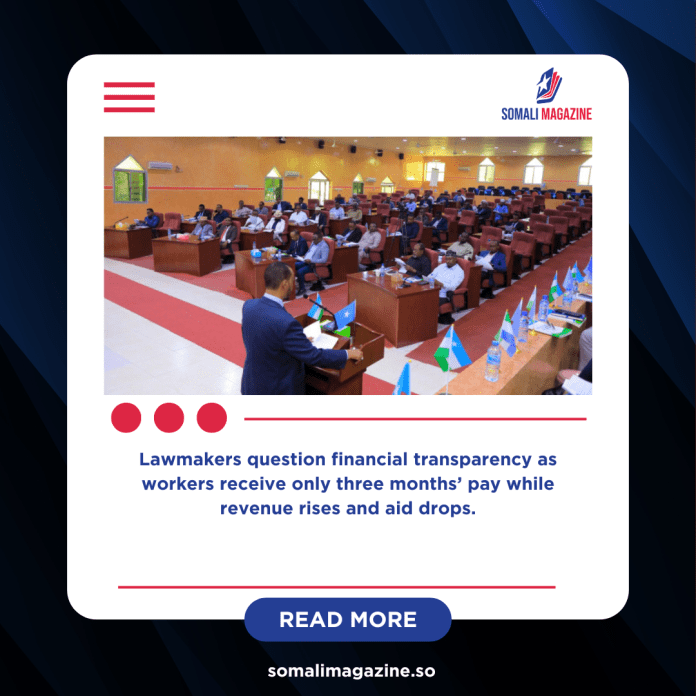
Puntland lawmakers have expressed serious frustration over the government’s failure to consistently pay civil servants, despite the state parliament approving a budget for 2026 that is valued at more than $300 million. Members of Parliament questioned why government workers have only received three months’ salary since the start of the year, even though the allocation for salaries was fully included in the budget they passed.
During a tense parliamentary session, several legislators described the situation as embarrassing and unacceptable. They said it has become a pattern for the parliament to debate and pass large annual budgets that never seem to be implemented as planned. According to the lawmakers, this failure raises questions about how public funds are being managed and why essential obligations like salaries are not being met.
A number of MPs insisted that the Ministry of Finance must explain in clear terms how the funds intended for civil servants, soldiers, and other state employees have been used. They argued that Puntland’s financial management lacks transparency and that the public deserves to know exactly where their tax money is going. They also pointed out that the government had previously stated that the costs of ongoing military operations had already been accounted for in the general budget. Because of this earlier assurance, lawmakers said there was no reasonable explanation for the current salary delays.
The Parliamentary Finance Committee responded by informing MPs that the government has promised to make major improvements next year, particularly in paying the salaries of civil servants and members of the security forces on time. According to the committee, revenue collection in Puntland has increased due to the rollout of a new tax system. However, they admitted that the financial challenges remain significant and that the improvements will take time.
President Said Abdullahi Deni has come under increasing pressure from the public and from within the government for failing to ensure regular payments to state employees. Teachers, healthcare workers, and members of various security forces have been among those who have gone months without their salaries, affecting their livelihoods and weakening morale. Critics argue that even with the security challenges Puntland is facing, the government should still prioritize the welfare of its workforce.
Puntland is currently fighting ISIS militants in the Bari mountains, a military campaign that requires consistent funding, logistical support, and troop readiness. At the same time, the state is in a political dispute with the Federal Government of Somalia, which has added to the overall tension and instability. Despite these challenges, lawmakers insisted that the government must create a better balance between military spending and the day-to-day needs of its citizens and employees.
In addition to internal financial issues, Puntland officials say they are dealing with a major decline in external support. According to state authorities, funding from international organizations and United Nations agencies has dropped by about 60 percent. This decline is part of a larger reduction in global aid to Somalia, which has affected many regions that rely heavily on donor support for development, humanitarian programs, and government operations.
Lawmakers acknowledged that reduced aid has increased the strain on Puntland’s budget, but they also emphasized that the government must improve its financial accountability and ensure that available resources are being used responsibly. They stressed that the trust between the government and the public is weakening and that restoring confidence will require consistent salary payments, clear financial reporting, and better communication.
As the debate continues, many Puntland citizens hope that the government will take concrete steps to solve the salary crisis and improve financial management. For now, the parliament expects the Ministry of Finance to deliver detailed explanations and to outline realistic plans for preventing similar issues in the future.