
Facebook

Twitter (X)

Instagram

Somali Magazine - People's Magazine
Nearly 6.5 million people in Somalia are facing severe hunger as drought, conflict and shrinking global aid push the country deeper into a humanitarian crisis, according to the federal government and United Nations agencies.
New findings from the Integrated Food Security Phase Classification show that by the end of March, 6.5 million people are expected to experience crisis-level hunger or worse. This means millions of families are struggling to find enough food each day, with many surviving on reduced meals or going entire days without eating.
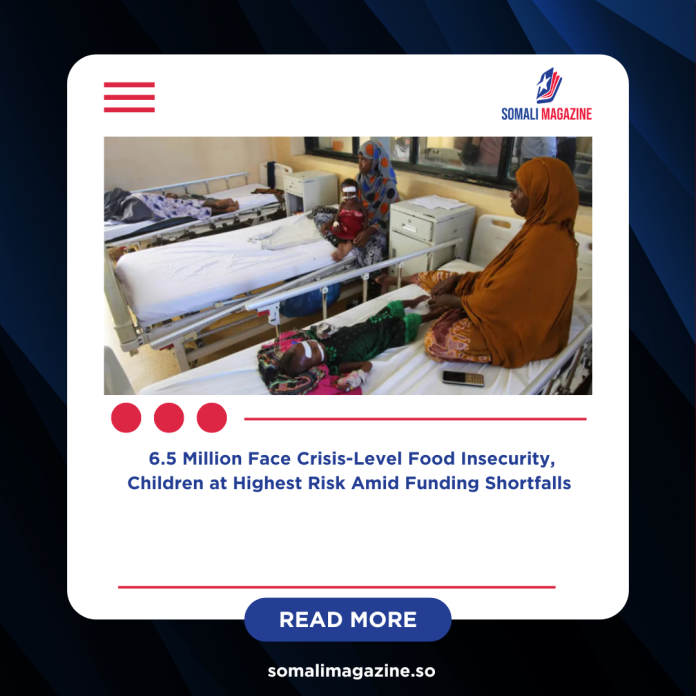
Children are among the hardest hit. The report estimates that 1.84 million children under the age of five will suffer from acute malnutrition in 2026. Out of these, nearly 500,000 are likely to be severely malnourished, putting their lives at serious risk. Malnutrition at such a young age can have long-term effects on physical and mental development, and in the most severe cases, it can be fatal without urgent treatment.
Officials say the worsening food crisis is driven by several factors happening at the same time. Prolonged drought has left rivers and water sources dry, damaging crops and killing livestock. In many rural areas, families depend on farming and herding animals to survive. With little rain and failing harvests, their main sources of food and income have disappeared.
Lower-than-average rainfall has intensified the drought, leading to widespread crop failures and rising food prices. As supplies shrink, the cost of basic items continues to climb, making it even harder for families to afford food. Water shortages have also become more severe, especially in southern and central parts of the country. Even if the upcoming rainy season performs at average levels, experts warn that water access is unlikely to improve quickly.
The main rainy season, which runs from April to June, is critical for agriculture and livestock. However, no significant rainfall is expected before then. Humanitarian officials stress that the coming months are crucial and that immediate life-saving support is needed to prevent the situation from getting worse.
George Conway, the U.N. humanitarian coordinator for Somalia, said the drought emergency has reached alarming levels. He described rising water prices, limited food supplies, dying livestock and extremely low humanitarian funding as signs of a deepening crisis. According to him, urgent assistance is necessary to help vulnerable communities survive until conditions improve.
Even if the rains arrive as expected, recovery will not happen overnight. Officials project that 5.5 million people could still face crisis-level hunger or worse later in 2026. Years of repeated drought have weakened communities, drained savings and reduced their ability to cope with new shocks.
Conflict and insecurity are adding to the crisis. Between July and December, about 278,000 people were displaced due to drought and ongoing violence. Many of those forced to flee have lost their farms, animals and access to markets. Displacement also makes it harder for aid agencies to deliver food, clean water and medical assistance.
Mohamud Moallim Abdulle, commissioner of the Somalia Disaster Management Agency, described the drought as severe and deeply worrying. He called on international partners, the Somali diaspora, businesses and civil society groups to step up support and respond quickly to the growing needs.
At the same time, humanitarian agencies are facing major funding shortages. The United Nations and the Somali government warn that global aid cuts have forced many organizations to reduce or suspend critical programs. These include food distribution, health services, nutrition support for children and water and sanitation projects. Without sufficient funding, many vulnerable families may be left without essential assistance.
As drought, conflict and limited aid continue to overlap, millions of Somalis remain at risk. Humanitarian leaders say coordinated action and increased funding are urgently needed to prevent the crisis from escalating further and to help communities rebuild their lives.