
Facebook

Twitter (X)

Instagram

Somali Magazine - People's Magazine
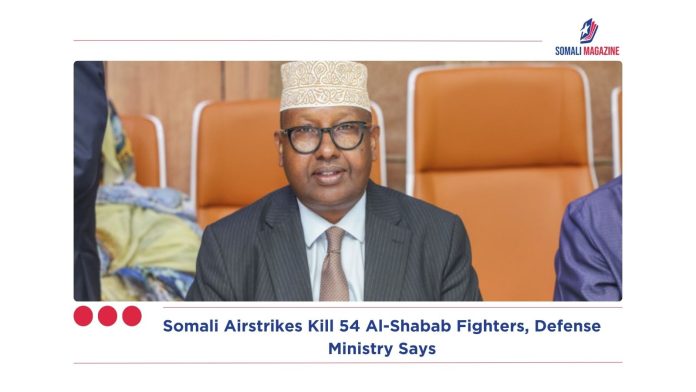
Somali airstrikes kill 54 Al-Shabab fighters, according to the Somali Defense Ministry, marking one of the latest developments in the country’s ongoing counterterrorism campaign against the militant group. Officials said the strikes targeted key Al-Shabab positions in southern Somalia, though independent verification of the reported casualties remains limited.
In a statement, the Somali Defense Ministry indicated that the airstrikes were conducted in coordination with ongoing ground operations aimed at weakening the group’s operational capacity. The ministry described the targets as strategic gathering points used by Al-Shabab fighters, adding that the operation was part of a broader effort to disrupt planned attacks. However, further details on the exact locations and timing of the strikes were not fully disclosed.
Al-Shabab, an Islamist militant group linked to Al-Qaeda, has waged a prolonged insurgency against the Somali government for over a decade. The group frequently carries out attacks targeting civilians, security forces, and government infrastructure. Somalia counterterrorism operations have intensified in recent years, with authorities increasingly relying on coordinated military airstrikes alongside local militia support.
Security analysts note that while such operations may degrade Al-Shabab’s immediate capabilities, the group has historically demonstrated resilience by regrouping and adapting its tactics. Experts also caution that casualty figures released by government sources should be viewed carefully until independently confirmed, as access to conflict zones is often restricted.
The Somali government has repeatedly emphasized its commitment to restoring stability, with officials framing recent military gains as part of a turning point in the fight against extremism. International partners, including regional and Western allies, have continued to support military airstrikes in Somalia through intelligence sharing and logistical assistance.
Despite these efforts, the broader security situation remains fragile. Reports suggest that Al-Shabab continues to maintain influence in rural areas, where governance gaps persist. Civilian safety and humanitarian concerns also remain central, particularly in regions affected by repeated clashes.
The announcement that Somali airstrikes kill 54 Al-Shabab fighters underscores the ongoing intensity of the conflict. While government forces highlight operational successes, observers stress that lasting stability will depend not only on military action but also on political reconciliation and sustained development efforts across Somalia.