Facebook

Twitter (X)

Instagram

Somali Magazine - People's Magazine
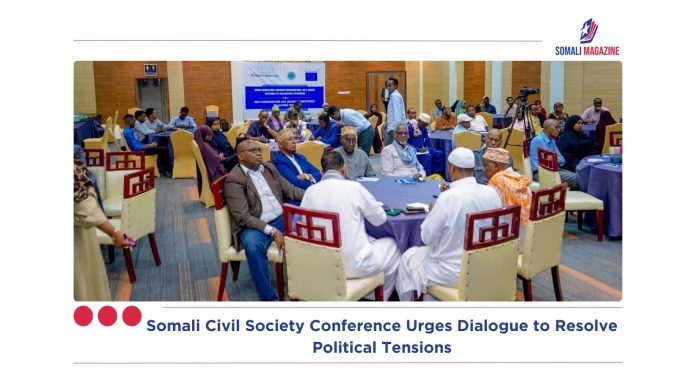
A Somali Civil Society conference urges dialogue as a central pathway to easing ongoing political tensions, bringing together community leaders, advocacy groups, and policy stakeholders to emphasize the need for constructive engagement. According to participants, the gathering focused on reinforcing peaceful communication channels and encouraging consensus-driven approaches to governance challenges currently affecting the country.
Reports suggest that representatives from various civil society organizations highlighted concerns about prolonged political disagreements and their potential impact on institutional stability. While specific details of the discussions have not been fully disclosed, attendees indicated that the conference aimed to create a neutral platform where diverse perspectives could be shared without escalating divisions. Organizers emphasized that dialogue remains a critical tool in preventing further polarization.
The Somali Civil Society conference urges dialogue at a time when political tensions Somalia continues to face have drawn attention from both domestic observers and international partners. According to officials familiar with the broader context, disagreements over governance structures, electoral processes, and power-sharing arrangements have contributed to uncertainty in recent months. Civil society groups, often positioned as intermediaries, have increasingly called for inclusive conversations involving government representatives, opposition figures, and regional stakeholders.
Participants also pointed to the importance of mediation efforts led by non-governmental actors, noting that sustained engagement could help rebuild trust among competing political interests. Some experts suggest that civil society plays a vital role in bridging communication gaps, particularly in situations where formal negotiations face delays or challenges. However, they caution that such efforts require consistent support and recognition from political leaders to be effective.
According to early reports, the conference concluded with a general call for national dialogue Somalia stakeholders can engage in without preconditions. While no formal agreements were announced, attendees expressed the view that continued discussions could lay the groundwork for more structured negotiations in the future. Observers note that similar initiatives in the past have contributed to incremental progress, though outcomes have varied depending on the level of political commitment.
Government officials have not issued a detailed response to the conference outcomes, but previous statements indicate a stated willingness to pursue dialogue within constitutional frameworks. Analysts emphasize that translating calls for dialogue into actionable steps will likely depend on coordination between state institutions and civil society actors.
As Somalia navigates its evolving political landscape, the conference reflects ongoing efforts by non-state actors to encourage stability through engagement rather than confrontation. While uncertainties remain, the emphasis on dialogue underscores a broader recognition of the need for inclusive and sustained communication in addressing complex political challenges.