
Facebook

Twitter (X)

Instagram

Somali Magazine - People's Magazine
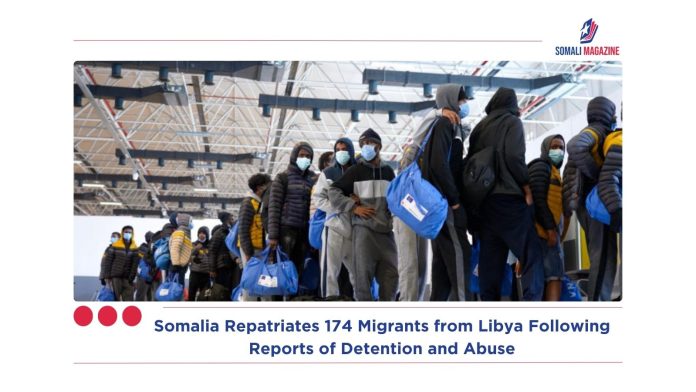
Somalia has repatriated 174 migrants from Libya after reports of detention and abuse, in a coordinated effort involving government agencies and international partners, according to officials. The group arrived in Mogadishu this week, marking one of the latest returns amid ongoing concerns over the treatment of migrants in Libya.
According to Somalia’s Ministry of Foreign Affairs, the returnees had been held in detention facilities under harsh conditions, where they reportedly faced abuse and severe hardship. The migrants were received at Aden Adde International Airport by government officials, including representatives from the foreign ministry.
Officials stated that the repatriation operation was carried out in collaboration with the International Organization for Migration (IOM) and the Somali embassy in Libya. Upon arrival, the returnees were provided with immediate assistance, including medical care, temporary accommodation, and psychosocial support, while reintegration programmes are expected to follow.
The Somalia repatriates 174 migrants from Libya operation comes amid growing international concern about conditions faced by migrants in the North African country. Reports from humanitarian organizations and UN agencies have consistently highlighted widespread abuse in detention facilities, including forced labour, violence, and exploitation. A recent UN-backed report cited by media outlets suggests that migrants in Libya are frequently subjected to prolonged detention and inhumane treatment.
Libya remains a key transit hub for migrants attempting to reach Europe via the Mediterranean. However, the lack of stable governance and the presence of armed groups have contributed to a system where migrants are often detained in facilities described by rights groups as overcrowded and unsafe. Studies indicate that many detainees face arbitrary detention, with limited access to food, water, and medical care.
Somali authorities have previously warned about the dangers of irregular migration, particularly routes passing through Libya. Economic challenges, insecurity, and limited employment opportunities are often cited as factors driving young Somalis to undertake such journeys, despite the known risks.
The government has reiterated its commitment to protecting citizens abroad and curbing irregular migration through increased awareness campaigns and diplomatic engagement. Analysts note that while repatriation efforts provide immediate relief for returnees, long-term solutions will likely depend on addressing root causes of migration and strengthening international cooperation.
The latest operation highlights both the scale of the challenge and the continued vulnerability of migrants caught in complex regional migration networks.