
Facebook

Twitter (X)

Instagram

Somali Magazine - People's Magazine
Farmer Yusuf Bulle travelled for days from a remote part of southern Somalia to the capital, Mogadishu, to save the life of his severely malnourished 3-year-old son. In his home area, there are no functioning hospitals, and the child’s only hope was Banadir Hospital, one of the few major public health facilities still operating in the country. After more than two weeks of treatment, doctors said the boy was finally out of danger.
Somalia is one of the poorest countries in the world, and its fragile health system has been pushed to the brink. The situation worsened after the United States cut funding to the U.S. Agency for International Development earlier this year. According to Somalia’s deputy health minister, the cuts resulted in more than 6,000 health workers losing their jobs and affected roughly 2,000 health facilities. In a country that largely relies on external aid, this was a devastating blow.
Although the Somali government has recently made progress in reducing attacks by the al-Shabab militant group, the fight against the extremists has taken resources and attention away from essential services like health care. Many Somalis say they cannot rely on their government, which prioritizes security operations over social services.
The Ministry of Health received $91 million from the national budget this year — an increase from the previous year — but most of that money still comes from international donors. Experts warn that donor funding is unpredictable, and the U.S. cuts have reminded Somalia how quickly support can disappear.
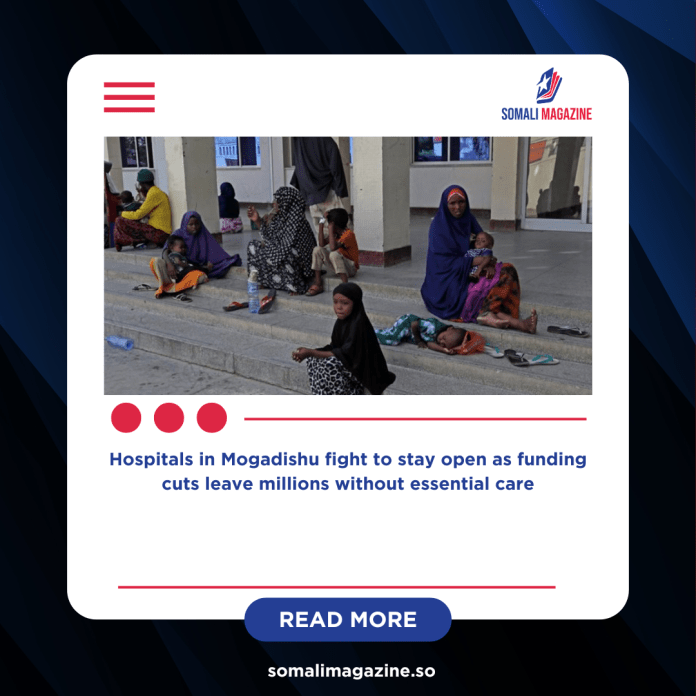
Outside Mogadishu, many regions have no public hospitals at all. Families often risk travelling through unsafe areas to reach the few facilities that are still functioning in the capital. Two of the most important are Banadir Hospital, built in the 1970s, and De Martino Hospital, established nearly a century ago.
Both hospitals rely heavily on international organizations to keep their doors open. At Banadir, the unit that treats malnourished children is fully funded by Concern Worldwide. When the U.S. funding cuts hit the hospital, 37 staff members lost their jobs, and the humanitarian group stepped in to pay the remaining workers and provide food supplies for mothers and children.
At De Martino Hospital, the director worries about the future. The facility depends on two other humanitarian organizations, but their contracts end in 2025. The hospital treats a large number of children suffering from diphtheria — a preventable disease that is spreading again in rural areas because parents are too afraid of militant attacks to take their children for routine vaccinations. Much of the hospital’s equipment was donated, and administrators fear donors are becoming exhausted after years of supporting Somalia’s health system.
Most services at De Martino are free thanks to outside funding. Patients with non-urgent conditions are sometimes asked to pay small fees, but the poorest people continue to rely on the hospital because they know they won’t be turned away. One woman who had recently given birth said she came because she was told she would receive free care.
Somali officials say they are working with partners on a contingency plan to reduce the impact of lost funding, but they have not provided details. Many civic leaders argue that the government’s focus on military operations has left other public needs unattended. Even though Somalia has foreign partners providing training, peacekeepers, and military support, its health sector remains extremely fragile.
Experts warn that without a long-term national health strategy, Somalia will continue to struggle. The country’s limited public hospitals serve as the last resort for thousands of vulnerable people, but they cannot operate without outside help. For many Somalis, the ability to access basic medical care still depends on donor generosity — something that may not last forever.