
Facebook

Twitter (X)

Instagram

Somali Magazine - People's Magazine
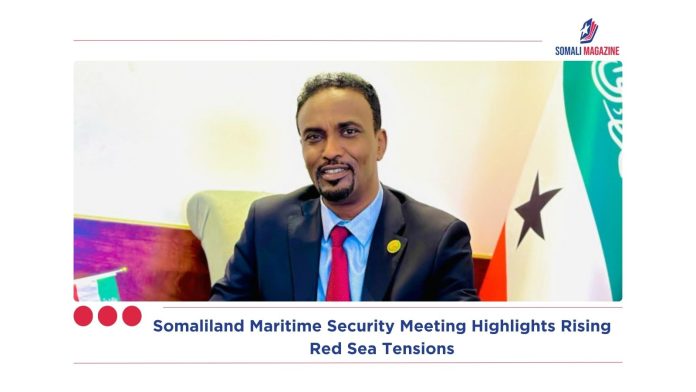
The Somaliland maritime security meeting has brought renewed attention to rising Red Sea tensions, as regional leaders and security officials gathered to assess emerging threats and reinforce cooperation along one of the world’s most strategic waterways. Held in the port city of Berbera, the discussions reflect growing concern over the impact of instability in the Red Sea on the Horn of Africa.
The Somaliland maritime security meeting comes at a time when global shipping routes passing through the Red Sea face increasing risks linked to regional conflicts and geopolitical rivalries. Officials emphasised the need for coordinated responses to safeguard maritime trade, which is vital not only to Somaliland but to the broader East African and Middle Eastern economies.
Government representatives highlighted the importance of strengthening maritime surveillance, improving port security infrastructure, and enhancing intelligence sharing with international partners. Somaliland authorities have, in recent years, invested in modernising Berbera Port, positioning it as a key commercial hub. However, rising Red Sea tensions have underscored vulnerabilities that could disrupt trade flows and economic growth.
Security analysts note that the Horn of Africa security landscape is closely tied to developments across the Red Sea, including conflicts in Yemen and increased naval activity by global powers. These dynamics have raised concerns about piracy, arms trafficking, and potential spillover effects that could threaten coastal communities and shipping lanes.
During the meeting, officials reiterated Somaliland’s commitment to playing a constructive role in maintaining regional stability. While not internationally recognised as a sovereign state, Somaliland has established relatively stable governance structures and has actively engaged in security partnerships aimed at protecting its coastline. The maritime security Somaliland agenda has increasingly focused on aligning local capabilities with broader international efforts to secure critical waterways.
Participants also discussed the role of regional cooperation frameworks, calling for stronger collaboration among neighbouring countries to address shared challenges. Experts argue that effective maritime security requires not only national efforts but also coordinated regional strategies, particularly in areas such as information exchange and joint patrols.
The economic stakes remain high. The Red Sea serves as a major artery for global trade, with millions of barrels of oil and vast quantities of goods passing through its waters daily. Disruptions to shipping routes security could have far-reaching consequences, driving up costs and affecting supply chains across continents. For Somaliland, ensuring the safety of its ports and maritime corridors is essential to sustaining economic development and attracting foreign investment.
Observers say the Somaliland maritime security meeting signals a proactive approach to addressing these risks, even as uncertainties persist. By focusing on preparedness and collaboration, Somaliland aims to position itself as a reliable partner in efforts to stabilise the region.
As Red Sea tensions continue to evolve, the outcomes of such meetings may play a crucial role in shaping the security environment of the Horn of Africa. For now, the emphasis remains on vigilance, cooperation, and the shared goal of keeping one of the world’s busiest maritime corridors safe and secure.