
Facebook

Twitter (X)

Instagram

Somali Magazine - People's Magazine
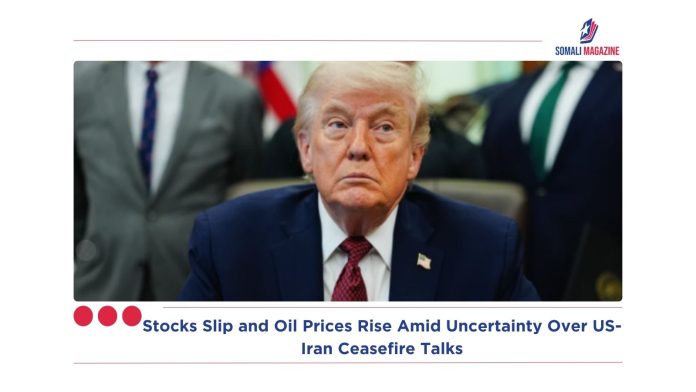
Global markets showed mixed reactions as stocks slip and oil prices rise amid continued uncertainty surrounding reported US-Iran ceasefire talks. Investors appeared cautious, with equity markets facing pressure while energy prices moved higher, reflecting concerns about potential disruptions and broader geopolitical risks.
According to market analysts, stocks declined across several major indices as traders responded to evolving developments linked to the US-Iran ceasefire talks. Early reports indicate that discussions may be ongoing, but officials have not provided definitive confirmation on progress or outcomes. This lack of clarity has contributed to cautious sentiment, with investors adjusting positions in response to perceived risk.
At the same time, oil price fluctuations have trended upward, driven in part by concerns that instability in the region could affect supply routes or production levels. Analysts note that even the possibility of disruptions can influence pricing, particularly in markets already sensitive to geopolitical tensions markets. However, no verified reports have confirmed immediate supply interruptions at the time of writing.
Government sources in the United States and Iran have not released detailed public statements outlining the status of the talks. Reports suggest that diplomatic engagement may be ongoing, but the scope, participants, and potential agreements remain unclear. Experts emphasize that without confirmed outcomes, market reactions are likely to remain influenced by speculation and short-term sentiment shifts.
The relationship between geopolitical developments and financial markets has long been recognized, with energy markets often reacting more sharply to perceived risks. According to economic observers, rising oil prices can also contribute to broader concerns about inflation and economic stability, potentially influencing central bank policies and business planning.
Despite the current volatility, some analysts caution against overinterpreting short-term market movements. They note that global market volatility is often influenced by a range of factors, including economic data, monetary policy expectations, and investor behavior, in addition to geopolitical developments. As a result, sustained trends will likely depend on clearer signals from both diplomatic channels and economic indicators.
The situation underscores the interconnected nature of global markets, where developments in one region can have far-reaching implications. Investors are expected to monitor updates closely, particularly any official confirmation regarding the US-Iran ceasefire talks or changes in energy supply dynamics.
As stocks slip and oil prices rise, the immediate outlook remains uncertain, with market participants balancing risk and opportunity in an environment shaped by incomplete information. Further clarity on diplomatic efforts may play a key role in determining the direction of both equity and energy markets in the coming days.