Facebook

Twitter (X)

Instagram

Somali Magazine - People's Magazine
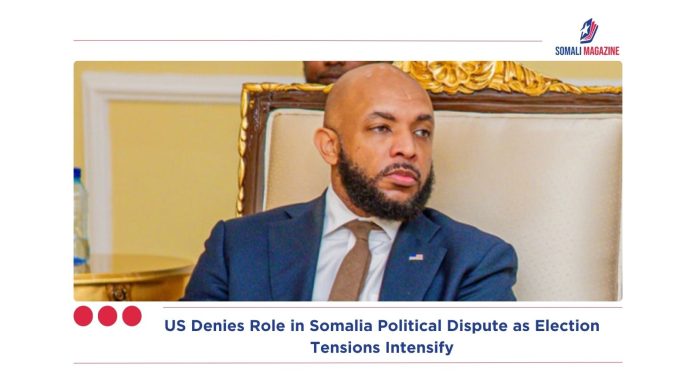
The United States has denied claims that it is mediating the ongoing Somalia political dispute, as tensions linked to the country’s electoral process continue to rise. In a statement attributed to officials from the U.S. State Department, the government said it is not directly involved in brokering talks between Somali political actors, countering reports that suggested otherwise.
According to early reports circulating in regional media, there had been speculation that US diplomats were playing a behind-the-scenes role in efforts to resolve disagreements between federal authorities and opposition groups. However, US officials have clarified that while they remain engaged with Somali leaders, their role is limited to encouraging dialogue rather than acting as formal mediators.
The Somalia political dispute is centered on disagreements over electoral processes, power-sharing arrangements, and the broader structure of governance. Analysts note that such disputes are not uncommon in Somalia’s post-conflict political system, where federal and regional dynamics often intersect in complex ways. As election timelines approach, these tensions have reportedly intensified, raising concerns among both domestic stakeholders and international observers.
Officials from Federal Government of Somalia have not publicly confirmed any formal mediation efforts by external actors. At the same time, opposition figures have called for greater transparency and inclusivity in the electoral process, though specific demands vary among different groups. The absence of a unified position has further complicated efforts to reach consensus.
International partners, including the United Nations and African Union, have historically supported Somalia’s political processes through technical assistance and diplomatic engagement. While there has been no confirmation of a coordinated mediation initiative, experts suggest that external actors often play informal roles in facilitating communication, even when not officially designated as mediators.
Observers warn that prolonged uncertainty could affect stability, particularly if electoral timelines are delayed or contested outcomes emerge. However, they also emphasize that Somalia has navigated similar challenges in previous election cycles, often reaching negotiated solutions after periods of tension.
For now, the situation remains fluid, with no clear resolution in sight. The US position underscores a cautious approach to involvement, focusing on support rather than direct intervention. As developments continue, attention is likely to remain on how Somali leaders manage the dispute internally and whether broader international engagement becomes necessary.